




What's Happening?
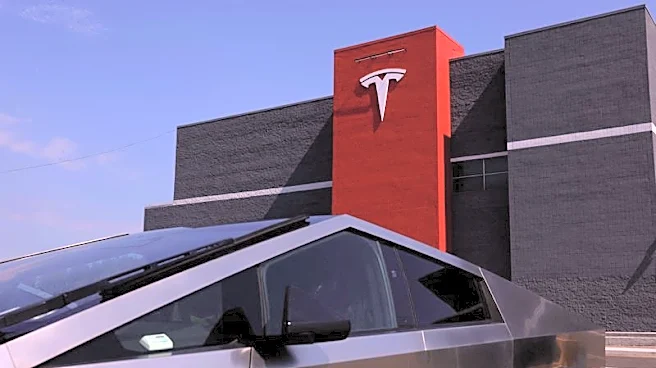
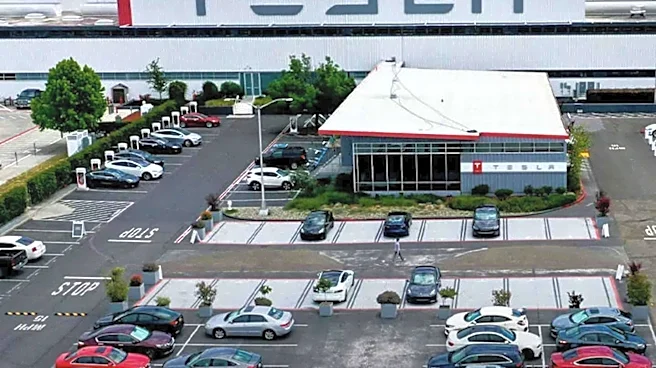
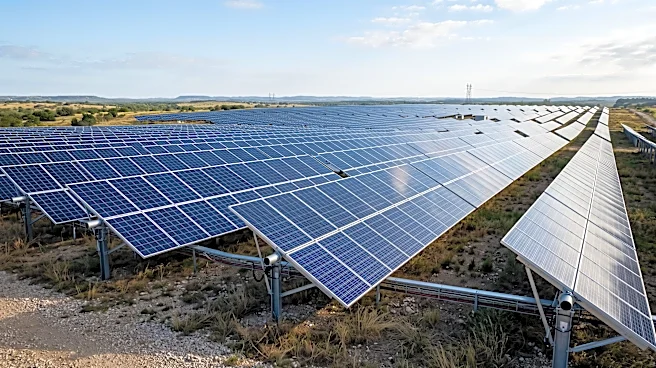
Tesla is seeking a 10-year tax abatement on school property taxes for a proposed $10.1 billion advanced manufacturing plant in Fort Bend County, Texas. The facility, dubbed 'Project Crystal Sun,' would produce photovoltaic solar cells and assembled solar modules.
The Lamar Consolidated Independent School District (Lamar CISD) trustees unanimously approved the incentive with a 7-0 vote. This approval is a step in a larger process, as Tesla has not yet made a final site-selection decision and is reportedly considering another location outside of Texas. The proposed capital commitment includes $1.5 billion for real property and $8.6 billion for manufacturing equipment and personal property. Under the Jobs, Energy, Technology and Innovation Act (JETI) program, the school maintenance-and-operations taxes would be zero during construction and then apply to 50 percent of the eligible taxable value from 2029 through 2038. Debt-service taxes, however, would continue to apply to the property's full value.
Why It's Important?
This development is significant for several reasons. For Texas, securing a project of this magnitude could bolster its position as a hub for advanced manufacturing and clean energy, potentially creating numerous jobs and expanding the local tax base in the long term. The substantial investment in solar cell and module production aligns with broader national goals of increasing domestic manufacturing capabilities in renewable energy. For Tesla, a successful tax break would significantly reduce operational costs for a decade, making the Texas location more financially attractive. The high proportion of capital allocated to manufacturing equipment ($8.6 billion) suggests a sophisticated, semiconductor-style facility, indicating a deeper push into energy hardware production. The unanimous school board vote highlights the local community's perceived benefits, such as future tax revenue and economic development, despite the immediate tax limitation. However, the ongoing site selection process underscores the competitive nature of attracting large industrial projects, with states and localities offering incentives to secure investments.
What's Next?
The proposal still requires additional state action before a final agreement can take effect, with reports indicating that Texas Governor Greg Abbott is involved in the approval track. Tesla's final site selection remains pending, and the company is reportedly considering an alternative location outside of Texas. Therefore, the plant's construction in Fort Bend County is not yet confirmed. Key milestones to watch include any official statement from Tesla regarding its chosen site, further state-level approvals for the JETI application, and the details of any signed agreement that moves beyond the proposal stage. Should the project proceed in Texas, other manufacturers may cite this case when seeking similar tax limitations from Texas districts, potentially leading to a trend of increased incentive applications for large industrial projects.
Beyond the Headlines
The pursuit of significant tax abatements for large industrial projects like Tesla's 'Project Crystal Sun' reflects a broader trend of economic competition among U.S. states and localities. While such incentives aim to attract investment and create jobs, they also raise questions about the balance between corporate benefits and public revenue, particularly for essential services like education. The public mood around large infrastructure projects has become more scrutinizing, with increased attention on land use, power consumption, and tax implications. Although a solar plant differs from data centers in its environmental impact and job creation, the underlying questions about community give-and-take remain. The estimated $115.2 million in tax savings over 20 years, while substantial, represents only about 1.1% of the total capital commitment, prompting debate on the true value proposition for taxpayers. This situation highlights the complex interplay between corporate expansion strategies, local governance, and state economic development policies.