






What's Happening?
Residents of Vienna, VA, seeking late-night entertainment and dining options after 8 PM often travel to nearby Tysons, the Mosaic District, or into Arlington and Washington D.C. While Vienna itself has a more subdued evening scene, with establishments
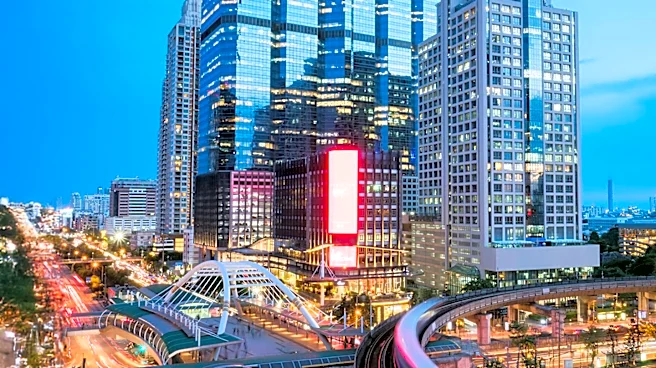
like Bear Branch Tavern open until 2 AM and Jammin' Java offering live music, many of its restaurants close between 8 PM and 9 PM. The Mosaic District, located east of Vienna via Route 29, and Tysons, seven minutes north on Route 123, provide a wider array of choices for those looking for a more bustling nightlife experience. This travel pattern highlights Vienna's character as a quieter, more residential town compared to its more urbanized neighbors.
Why It's Important?
The reliance of Vienna residents on neighboring areas for late-night activities underscores the distinct urban planning and lifestyle offerings within the Northern Virginia region. This dynamic influences real estate decisions, as potential homeowners weigh the tranquility of Vienna against the more vibrant, albeit distant, entertainment options. For local businesses in Vienna, it highlights a challenge in retaining evening customers, potentially impacting economic development and the diversity of local services. Conversely, for Tysons and the Mosaic District, it reinforces their roles as regional hubs for dining, shopping, and entertainment, attracting consumer spending from surrounding communities. This regional interdependence shapes local economies and consumer behavior across the DMV area.
What's Next?
Vienna residents will likely continue to utilize the Mosaic District, Tysons, Arlington, and D.C. for their late-night needs, maintaining the current pattern of regional entertainment consumption. Local businesses in Vienna might explore strategies to extend their hours or diversify their offerings to capture more of the late-evening market, though this would need to align with the town's generally quieter character. Developers in the Mosaic District and Tysons will likely continue to invest in and promote their entertainment and dining sectors, capitalizing on their appeal as regional destinations. Transportation infrastructure connecting these areas will remain crucial for facilitating this flow of residents and economic activity.
Beyond the Headlines
This situation reflects a broader demographic and lifestyle preference in suburban areas like Vienna, where residents often prioritize quiet residential living over a bustling nightlife. The 'trade-off' between a peaceful home environment and access to diverse entertainment options is a common consideration for families and individuals choosing where to live. The Mosaic District, in particular, represents a modern urban-suburban development model, designed to create a concentrated hub of retail, dining, and entertainment that serves both its immediate residents and those from surrounding communities. This model aims to offer urban amenities within a suburban context, addressing the desire for convenience and variety without the full commitment to city living. The ongoing evolution of these districts will continue to shape the regional landscape and lifestyle choices.