


What's Happening?
The United States has implemented 50% tariffs on certain Canadian products after trade negotiations between the two countries collapsed. U.S. Trade Representative Jamieson Greer announced that Canada declined to finalize a trade deal under the terms agreed
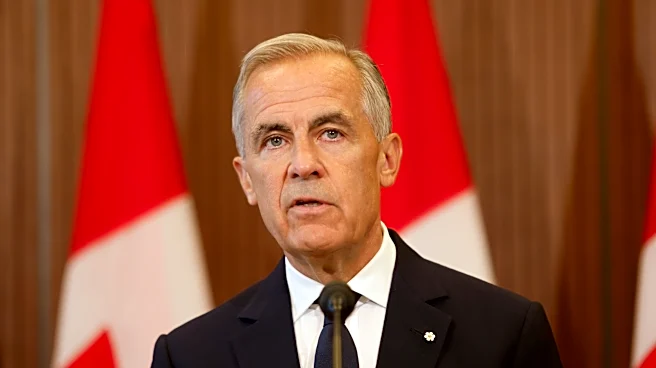
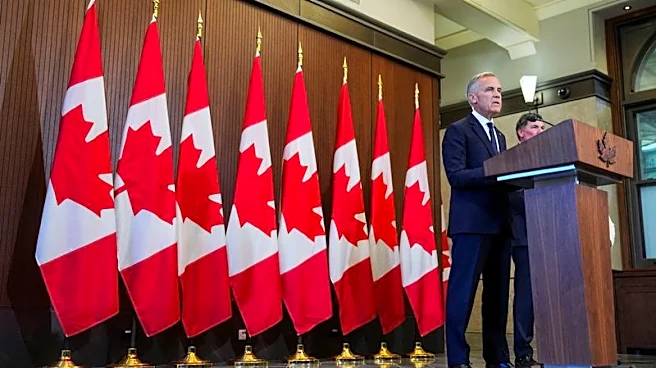
upon earlier in the week, leading to the tariffs taking effect at 12:01 a.m. EDT on Saturday. Canadian Prime Minister Mark Carney stated that he suspended negotiations due to 'unfair' and 'uneconomic' last-minute changes to the proposed terms, which he believes called into question the reliability of any agreement. In response, Canada has vowed to retaliate with matching tariffs 'dollar for dollar.' These new tariffs impact approximately $20 billion worth of Canadian goods, representing 5.5% of Canada's exports to the United States, and target products ranging from hockey sticks to cement. The U.S. had previously threatened these duties in July unless a deal was reached within 30 days, with President Trump announcing a temporary pause on the tariff threat just days before the deadline, indicating a deal was in its final stages. However, the failure to reach a final agreement has led to the imposition of these significant tariffs.
Why It's Important?
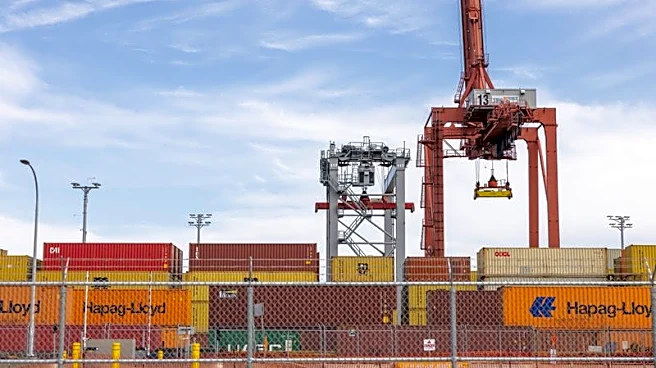
The imposition of 50% tariffs by the U.S. on Canadian goods marks a significant escalation in trade tensions between the two neighboring countries, which share heavily interconnected economies. With roughly 70% of all Canadian exports heading to the United States, Canada is particularly vulnerable to punitive U.S. trade actions. Previous U.S. levies on autos, steel, aluminum, and lumber have already impacted Canada, contributing to job losses and stunted economic growth, with Canada even entering a technical recession this year. This new round of tariffs could further strain economic conditions for Canada, potentially leading to more job losses and economic contraction. For the U.S., these tariffs could result in higher costs for consumers and businesses relying on Canadian imports, and may provoke retaliatory measures from Canada, creating a cycle of trade disputes. The failure of these negotiations also highlights the challenges in maintaining stable trade relations, even with close allies, and could set a precedent for future trade discussions with other nations. The situation underscores the fragility of international trade agreements and the potential for political disagreements to disrupt established economic partnerships.
What's Next?
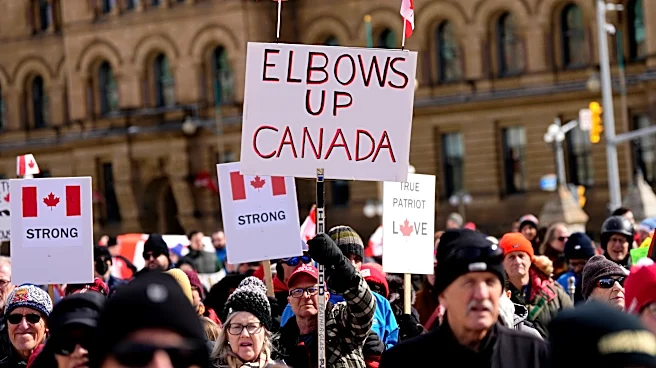
Following the imposition of U.S. tariffs, Canada has pledged to retaliate immediately with matching tariffs 'dollar for dollar' to protect its workers and businesses. This suggests a potential escalation into a broader trade war between the two nations. Canadian Prime Minister Mark Carney is expected to continue his strategy of diversifying economic partnerships to reduce Canada's reliance on the U.S. market, having already sought deals with countries like China, India, Saudi Arabia, and European nations. Domestically, Canada will likely continue efforts to revitalize its internal trade and accelerate major infrastructure projects to cushion the impact of the U.S. tariffs. The long-term implications for the United States-Mexico-Canada Agreement (USMCA) are also uncertain, as the new tariffs affect products previously protected under the pact, potentially weakening its effectiveness as a trade shield. The situation will likely lead to ongoing diplomatic efforts to resolve the trade dispute, but the immediate future points towards increased trade barriers and economic uncertainty for both countries.
Beyond the Headlines
The breakdown in trade negotiations and the subsequent imposition of tariffs between the U.S. and Canada reveal deeper implications beyond immediate economic impacts. The U.S. decision to impose tariffs, despite a seemingly imminent deal, raises questions about the reliability of trade agreements and the role of last-minute demands in international diplomacy. Canada's strong stance on 'unfair' terms and its commitment to retaliation highlight a growing assertiveness among U.S. allies in challenging what they perceive as protectionist measures. This development could encourage other nations to re-evaluate their trade dependencies and pursue diversification strategies, potentially leading to a more fragmented global trade landscape. Furthermore, the political pressure on leaders like Prime Minister Carney to 'take a hard line' against U.S. demands reflects a shift in public sentiment, where national interests and economic sovereignty are increasingly prioritized. The situation also underscores the ethical considerations of using economic leverage in international relations, and how such actions can strain long-standing alliances and foster distrust, potentially impacting broader geopolitical stability.