






What's Happening?
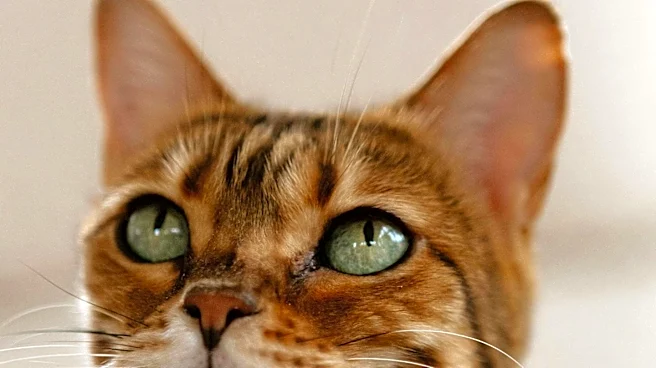
Cats are known for their facial whiskers, but they also have whiskers on their legs, known as carpal vibrissae. These specialized hairs are highly sensitive due to nerve endings at their base, similar to human fingertips. Carpal whiskers are found on the back
of each front leg and are believed to aid in navigation and prey handling, especially in low-light conditions. While cats are not the only animals with these whiskers, they are more common in species that grasp objects or climb, such as lemurs and armadillos. The exact role of carpal whiskers in cats remains uncertain, but they likely assist in safe movement and prey capture.
Why It's Important?
The study of carpal whiskers in cats and other animals provides insights into the evolutionary adaptations that enhance survival. Understanding these adaptations can inform broader biological research and contribute to the knowledge of animal behavior and sensory biology. This research highlights the complexity of animal sensory systems and their role in everyday activities, such as hunting and navigation. It also underscores the importance of sensory biology in understanding how animals interact with their environment.