






What's Happening?
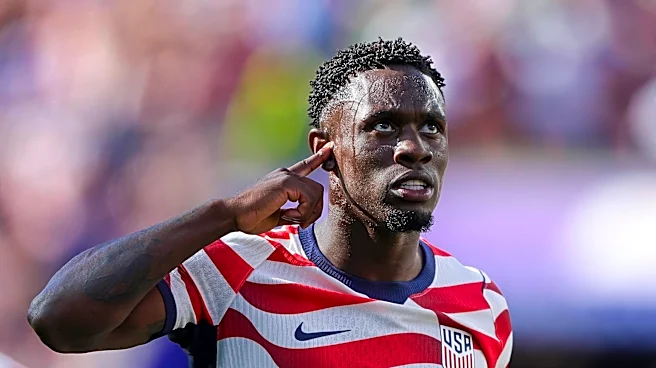
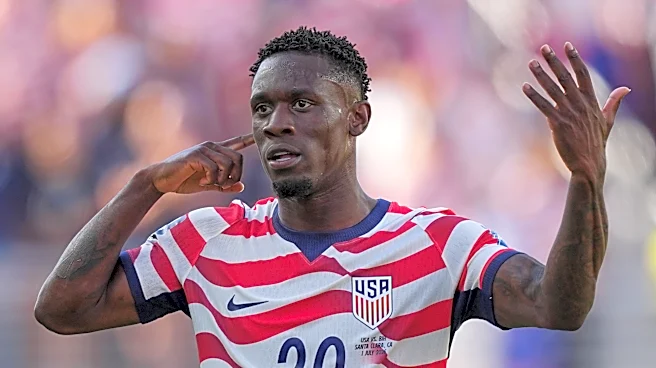
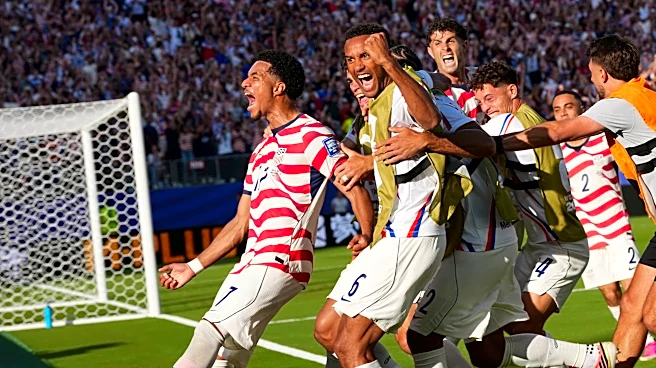
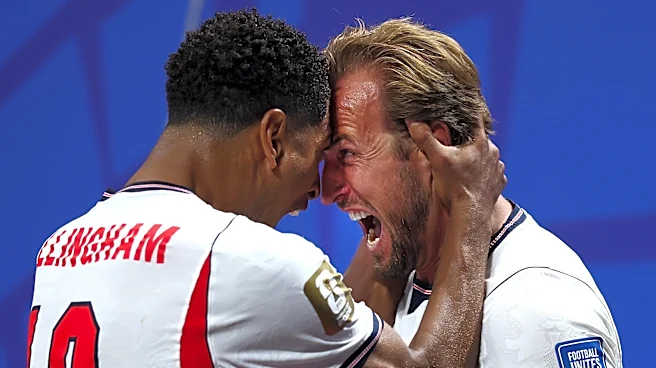
NBA superstar LeBron James praised Folarin Balogun, a forward for the U.S. men's national soccer team, after he scored a goal in the World Cup Round of 32 match against Bosnia and Herzegovina. Balogun, who was born in Brooklyn to Nigerian parents and raised in England,
has become a focal point in discussions about birthright citizenship in the U.S. His goal, which gave the U.S. a 1-0 lead, was celebrated by James on social media, where he lauded Balogun's performance and his recreation of James' signature celebration. However, Balogun's success was marred by a red card in the second half, which means he will miss the next game. The U.S. team, despite being down to 10 men, secured a 2-0 victory and will face Belgium in the Round of 16.
Why It's Important?
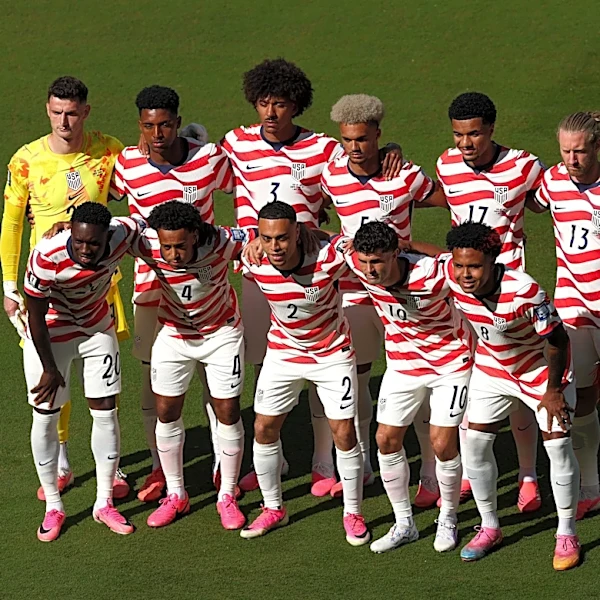
Balogun's performance and subsequent red card have sparked discussions about the role of immigration and birthright citizenship in shaping the U.S. national team. More than half of the team holds dual citizenship, highlighting the diverse backgrounds of its players. The debate over birthright citizenship has intensified following a recent Supreme Court decision that struck down an executive order by President Trump aimed at restricting this right. Balogun's case exemplifies the complexities of citizenship laws and their impact on sports and national identity. His presence on the team underscores the contributions of immigrants and their descendants to American society, particularly in sports.
What's Next?
The U.S. team will prepare to face Belgium in the Round of 16, with Balogun sidelined due to his red card. The broader debate on birthright citizenship is likely to continue, especially as political figures and legal experts weigh in on potential legislative or constitutional changes. The Supreme Court's recent ruling has closed some avenues for altering citizenship laws, but future challenges and discussions are expected as the nation grapples with immigration policies and their implications.
Beyond the Headlines
Balogun's story highlights the intersection of sports, immigration, and national identity. His journey from being born in the U.S. to playing on the national team illustrates the opportunities and challenges faced by dual citizens. The ongoing debate about birthright citizenship raises questions about national values and the definition of American identity. As the U.S. continues to diversify, these discussions will shape the country's social and cultural landscape, influencing policies and public perceptions.