






What's Happening?
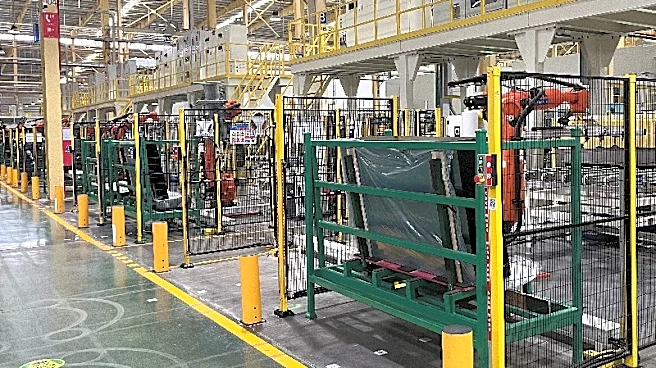
China's industrial production saw an acceleration in August, rising by 5.2% year-on-year, surpassing the 4.5% growth in July and exceeding average forecasts of 4.8%. This indicates a resilient manufacturing sector. However, this positive industrial output
is overshadowed by deepening concerns over weak domestic demand and declining investment. Retail sales, a key indicator of consumer activity, increased by only 0.4% in August, a decrease from 0.6% in July and below analyst expectations of 0.8%. Fixed-asset investment, which includes infrastructure and real estate, fell by 7.2% in the first eight months of the year, matching forecasts but worsening from the 6.7% decline recorded from January to July. This widening gap between robust production and sluggish domestic consumption is putting pressure on Beijing to implement further economic stimulus measures.
Why It's Important?
The imbalance in China's economy, characterized by strong industrial output but weak domestic demand, has significant implications for global markets and U.S. businesses. A slowdown in Chinese consumption could reduce demand for U.S. exports, impacting various sectors from agriculture to technology. Conversely, China's continued industrial strength might lead to increased competition in global markets, potentially affecting U.S. manufacturing. The situation also highlights the challenges Beijing faces in rebalancing its economy towards consumption-driven growth. For U.S. investors, the economic uncertainties in China could lead to volatility in global stock markets and commodity prices. The need for additional stimulus measures from the Chinese government could also influence global monetary policies and trade dynamics.
What's Next?
The Chinese government is expected to introduce further support measures to stimulate its economy, particularly focusing on boosting consumption and investment. Beijing has already accelerated the issuance of government bonds and expanded interest-rate subsidies for small private companies and consumers. The People's Bank of China has also pledged additional support, though direct cuts to key interest rates or banks' reserve requirement ratios have not yet been announced. September is seen as a crucial period for restoring business confidence ahead of the October Golden Week holiday. The effectiveness of these measures in bridging the gap between industrial production and domestic demand will be closely watched by global economic observers and could dictate China's economic trajectory in the coming months.
Beyond the Headlines
The persistent imbalance in China's economy reflects deeper structural issues, including a reliance on export-led growth and investment, rather than robust domestic consumption. This situation could lead to increased trade tensions if China's industrial overcapacity seeks outlets in international markets, potentially affecting U.S. industries. The government's response will also be critical in shaping global supply chains and commodity markets. Furthermore, the impact of extreme weather conditions, such as typhoons in August, on business operations and logistics underscores the growing influence of climate-related factors on economic stability. The long-term shift towards a more balanced economic model in China remains a significant challenge with far-reaching global implications.