






What's Happening?
A new organizing technique, dubbed the '3 Homes' method, is gaining traction as a low-stress way to tackle clutter. This method simplifies the decluttering process by assigning every item in a home to one of three categories: 'Everyday Home,' 'Seasonal
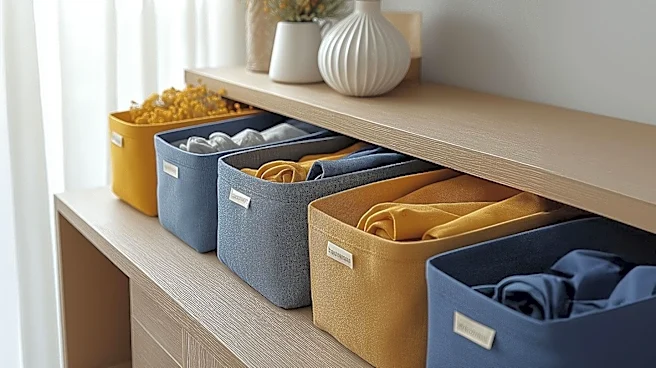
Home,' or 'Exit Home.' Items in the 'Everyday Home' category are those used daily and should be kept easily accessible. 'Seasonal Home' items are used only at specific times of the year and are stored out of sight, such as in a garage or on a high shelf. The 'Exit Home' category is for items ready to be donated or discarded, which should be grouped, contained, and easy to transport. This approach aims to reduce decision fatigue by providing a clear destination for every possession, acknowledging how people actually use and live with their belongings. Professional organizer Cathy Orr, co-founder of The Uncluttered Life, emphasizes that this method gives everything a clear place to land, preventing clutter accumulation.
Why It's Important?
The '3 Homes' method offers a practical and realistic solution to a common problem in many U.S. households: overwhelming clutter and the stress associated with organizing. In a society that often promotes consumerism, managing possessions can become a significant source of mental load and anxiety. This method's simplicity and clear categorization can empower individuals to regain control over their living spaces without feeling overwhelmed by rigid or unrealistic organizing systems. By reducing decision fatigue, it makes decluttering more approachable and sustainable. The emphasis on giving every item a 'home' fosters a more intentional relationship with possessions, potentially leading to less impulsive buying and a greater appreciation for what one owns. This can contribute to improved mental well-being and a more functional home environment, impacting daily routines and overall quality of life for many Americans.
What's Next?
As the '3 Homes' method gains popularity, it is likely to be adopted by more individuals seeking effective decluttering strategies. Professional organizers like Cathy Orr will continue to advocate for and teach this method through workshops, online content, and consultations. The approach could also be integrated into broader discussions about minimalist living, sustainable consumption, and home wellness. Expect to see more articles, social media content, and possibly even dedicated organizing products designed to facilitate the '3 Homes' system. The method's focus on repeatable, short decluttering sessions suggests a shift towards more manageable and less daunting organizing practices, which could encourage a wider demographic to engage in regular decluttering. This could lead to a general trend of more organized and less cluttered homes across the U.S.
Beyond the Headlines
The '3 Homes' method subtly reflects a deeper cultural shift towards mindful consumption and a desire for simplicity in an increasingly complex world. Beyond just tidiness, this approach encourages individuals to critically evaluate their possessions and their necessity, fostering a more intentional lifestyle. The psychological benefit of reducing decision fatigue is significant, as it frees up mental energy for more productive or enjoyable activities. This method also touches upon the environmental aspect of consumption, as the 'Exit Home' category promotes responsible disposal and donation, potentially reducing waste. By providing a structured yet flexible framework, the '3 Homes' method can help individuals cultivate a sense of control and peace within their personal spaces, ultimately contributing to a greater sense of well-being and a more sustainable way of living in the long term.