







What's Happening?
Gardening is closely linked to mindful living, encouraging individuals to slow down, observe small changes, and act with intention. This practice extends beyond the garden, influencing daily habits in eating, working, resting, and managing one's home.
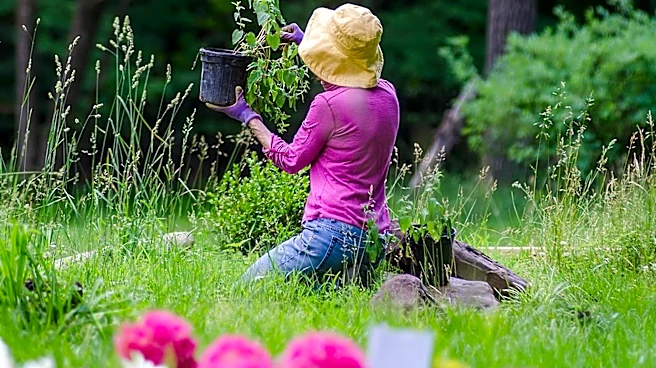
Mindful living, defined as paying attention to the present moment, is cultivated through gardening because plants reward attention and suffer from neglect. This daily interaction fosters a habit of close observation that can spread to other areas of life. For instance, growing food can lead to more conscious eating habits, reducing waste and encouraging home cooking. In the workplace, gardening promotes single-tasking, offers short, refreshing breaks, and teaches patience. It also provides a screen-free way to rest and brings structure to the week through routine plant care tasks.
Why It's Important?
The connection between gardening and mindful living is significant for individual well-being and societal trends. In an increasingly digital and fast-paced world, gardening offers a tangible, grounding activity that can combat stress and improve mental health. This practice can lead to healthier eating habits, reducing reliance on processed foods and fostering a greater appreciation for food sources. For employers, encouraging mindful activities like gardening could indirectly improve employee focus and reduce burnout. On a broader scale, it promotes sustainable living by encouraging resourcefulness, such as composting and repurposing materials. The accessibility of gardening, even with just one pot on a windowsill, makes mindful living attainable for a wide range of individuals, contributing to a more present and intentional society.
What's Next?
Individuals interested in cultivating mindful living through gardening can start with small, consistent habits, such as checking soil before watering, leaving phones aside during plant care, or observing one plant for a minute daily. These practices, even with a single plant, can begin to shift daily routines and foster greater presence. Gardening product suppliers and wellness advocates are likely to continue promoting the mental health benefits of plant care, offering resources and products that support mindful gardening practices. As awareness grows, more people may integrate gardening into their daily lives as a form of self-care and a pathway to a more intentional lifestyle.
Beyond the Headlines
The integration of gardening into mindful living touches upon deeper philosophical and psychological aspects of human existence. It speaks to an innate human need for connection with nature (biophilia) and the satisfaction derived from nurturing life. In a consumer-driven society, gardening offers a counter-narrative of creation and patience over instant gratification. It subtly reintroduces the concept of cyclical time and natural rhythms into daily life, contrasting with the linear, often hurried pace of modern existence. Furthermore, the act of gardening can be seen as a form of practical meditation, where repetitive tasks and sensory engagement lead to a state of flow and reduced mental clutter, offering a profound antidote to the anxieties of contemporary life.