







What's Happening?
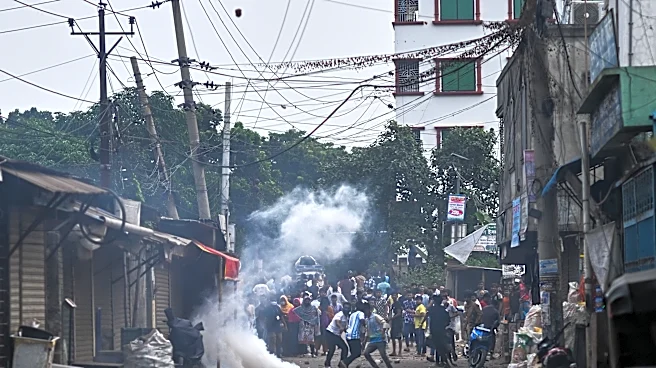
Garment workers in Bangladesh staged renewed protests on Thursday, leading to the suspension of factory operations. These demonstrations occurred despite a wage board's decision to implement a revised pay structure starting in December. The protests,
which began on Saturday, have resulted in the closure of hundreds of factories, causing disruptions in production and raising concerns about potential delays in export shipments. Bangladesh is the world's second-largest garment exporter, after China. While many workers initially reported to work in Ashulia, a major garment manufacturing hub, they later walked out and blocked a main highway, demanding a clear announcement regarding the proposed wage increase. Police used tear gas and sound grenades after protesters reportedly threw bricks and vandalized police vehicles. Over 100 factories in the Ashulia area suspended operations on Thursday, with additional police and Border Guard Bangladesh personnel deployed to prevent further unrest. The situation in other industrial hubs like Savar and Gazipur was calmer, with many workers returning to their jobs, though some factories remained temporarily closed.
Why It's Important?
The ongoing unrest in Bangladesh's garment sector poses significant risks to the global supply chain and major international brands. The industry employs approximately 4 million workers and is a key supplier for global brands such as H&M, Inditex (Zara's owner), and Walmart. Manufacturers are concerned that the protests could disrupt production schedules during the peak season for export orders, potentially leading to delays in getting products to market. Bangladesh's garment industry accounts for over 80% of the nation's export earnings, and its growth has been fueled by low wages and duty-free access to Western markets. The current demands for a significant wage increase, from 12,500 taka to 30,000 taka ($241.55) per month, highlight the growing pressure on the industry's low-cost advantage. If wages substantially increase, it could impact the pricing strategies of global retailers and potentially shift manufacturing considerations for brands reliant on Bangladesh's competitive labor costs.
What's Next?
The wage board announced on Wednesday that a revised wage structure would be implemented from December, with workers receiving their first pay under the new scale in January. However, the specific size of the wage increase has yet to be determined, which remains a central point of contention for the protesting workers. Authorities are urging factory employees to return to work, with security forces remaining on high alert across major industrial zones. The continuation of protests suggests that workers are not satisfied with the current announcements and are seeking a more definitive commitment to their wage demands. The coming weeks will likely see further negotiations between the wage board, factory owners, and worker representatives to finalize the new minimum wage. The outcome will determine whether the industry can stabilize production and avoid further disruptions to its export commitments.
Beyond the Headlines
The garment worker protests in Bangladesh underscore broader issues of labor rights, living wages, and the economic pressures faced by low-wage workers in global supply chains. Workers cite rising costs for food, housing, and transport as reasons for their demands, indicating that current wages are insufficient to meet basic living expenses. This situation highlights the ethical considerations for international brands that benefit from low production costs in countries like Bangladesh. The unrest could prompt greater scrutiny from consumers and advocacy groups regarding the labor practices and wage standards within the global garment industry. In the long term, sustained pressure for higher wages could lead to a re-evaluation of manufacturing locations by some brands, or it could push the industry towards greater automation to offset increased labor costs. This ongoing dispute reflects a critical tension between maintaining competitive pricing in the global market and ensuring fair compensation for the workforce that underpins the industry.