
What's Happening?
Jean's 'By the Sea,' a new seafood restaurant, has opened in Old West Durham, North Carolina, in the former location of Wimpy's Grill. Owner Kate Elia aimed to create a relaxed, beach-like atmosphere,
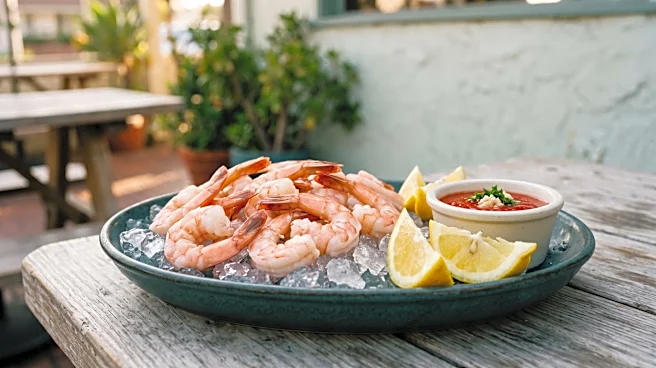
drawing inspiration from nostalgic beach trips. The restaurant features a menu with East Coast seafood, primarily sourced from North Carolina purveyors like Locals Seafood. Offerings include daily catch specials, raw oysters, ceviche, and chilled peel-and-eat shrimp, alongside traditional fried seafood calabash baskets. Kitchen manager Scott Perry butchers whole fish in-house daily. The renovation expanded the dining room and added a spacious outdoor patio. The beverage program, curated by Elia, includes a wine list, beer, and creative, beach-themed cocktails. In mid-July, Jean's also opened an outdoor bar called The Barj, serving drinks on Friday and Saturday evenings.
Why It's Important?
The opening of Jean's 'By the Sea' in Durham, North Carolina, signifies a notable development in the local culinary scene and reflects broader trends in the U.S. restaurant industry. The emphasis on sourcing seafood primarily from North Carolina purveyors like Locals Seafood highlights a growing consumer demand for locally sourced, fresh ingredients and supports regional economies. This trend towards local sourcing can influence supply chains and encourage sustainable fishing practices within the state. The restaurant's concept of offering both traditional fried seafood and lighter, more contemporary options like crudo and ceviche caters to a diverse customer base, indicating an evolving palate among U.S. diners. Furthermore, the transformation of a long-standing local establishment (Wimpy's Grill) into a new concept demonstrates the dynamic nature of urban development and the continuous revitalization of commercial spaces, impacting local employment and community character. The creation of a relaxed, family-friendly dining experience with an outdoor patio also aligns with post-pandemic consumer preferences for casual dining and outdoor spaces.
What's Next?
Jean's 'By the Sea' will likely focus on establishing itself as a staple in the Durham dining scene, building a loyal customer base through its fresh seafood offerings and unique atmosphere. The restaurant may continue to expand its menu with seasonal specials, leveraging the availability of local North Carolina seafood. The success of its outdoor bar, The Barj, could lead to extended hours or additional outdoor events, further enhancing its community appeal. As a new business, Jean's will need to navigate the competitive restaurant market, potentially through marketing efforts and community engagement. Its commitment to local sourcing could also inspire other restaurants in the region to adopt similar practices, strengthening the local food economy. The long-term success of Jean's 'By the Sea' will serve as an indicator of consumer preferences for coastal-inspired cuisine and locally sourced ingredients in the U.S. South.
Beyond the Headlines
The establishment of Jean's 'By the Sea' in a historically significant location like the former Wimpy's Grill speaks to the cultural evolution of American towns and cities. It represents a delicate balance between preserving local heritage and embracing new culinary and social trends. The owner's conscious decision to honor the property's neighborhood roots while introducing a fresh concept reflects a broader societal value placed on community identity and the desire to create spaces that resonate with both nostalgia and contemporary tastes. The restaurant's focus on creating a laid-back, accessible dining experience, as opposed to an upscale one, also highlights a shift in the U.S. dining landscape towards more casual, yet high-quality, food options. This trend can foster greater inclusivity in dining, making diverse culinary experiences accessible to a wider demographic. Furthermore, the emphasis on fresh, locally sourced seafood contributes to a growing national conversation about food systems, sustainability, and the importance of supporting regional producers, influencing consumer choices and agricultural policies.