





What's Happening?
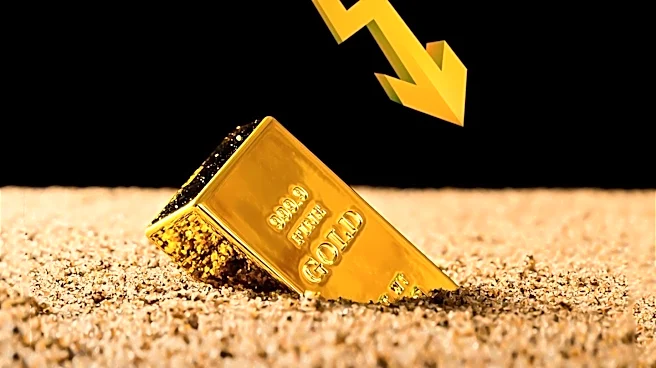
UBS strategists anticipate that gold prices will face headwinds into the first quarter of 2027. This forecast is primarily driven by stronger-than-expected U.S. labor market data and persistent inflation, which have reinforced expectations for further
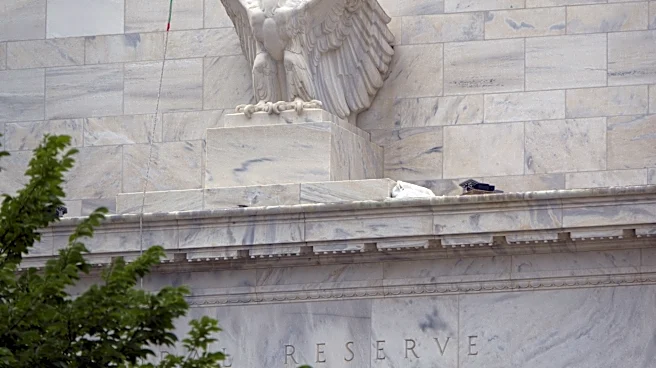
interest rate hikes by the Federal Reserve. Hawkish comments from Fed official Waller, including discussions of a potential 50 basis point hike in December, have contributed to this repricing. The prospect of higher U.S. rates has strengthened the dollar, subsequently weighing on gold, whose post-midterm election gains were short-lived. While gold exchange-traded fund holdings have remained relatively resilient, net positioning shifts have been more pronounced in futures markets. UBS suggests that the market might be overly optimistic regarding U.S. economic resilience and could be overestimating the extent and duration of higher interest rates.
Why It's Important?
This outlook from UBS is significant for investors and economic stakeholders, particularly those with exposure to gold and U.S. dollar-denominated assets. A stronger dollar, driven by higher U.S. interest rates, typically makes gold more expensive for international buyers, reducing demand. The expectation of continued Federal Reserve hawkishness signals a commitment to combating inflation, which could lead to a period of higher borrowing costs for businesses and consumers. This environment could impact corporate earnings, consumer spending, and overall economic growth. For U.S. industries, particularly those sensitive to interest rates like housing and manufacturing, sustained higher rates could present challenges. Conversely, a stronger dollar could benefit U.S. importers by making foreign goods cheaper, but it could also hurt exporters by making their products more expensive abroad.
What's Next?
UBS expects inflation to stabilize and U.S. economic activity to moderate slightly in 2027. This moderation could lead to a shift in rate expectations from further hikes to a pause, followed by cuts later in the year, which UBS believes would support a recovery in gold demand and prices. In the near term, however, above-potential U.S. growth, persistent inflation, and a hawkish Federal Reserve are likely to keep real yields elevated, overshadowing longer-term supports for gold, such as the U.S. fiscal deficit trajectory. UBS is monitoring for softer U.S. activity in the first quarter amidst higher rates and compressed real wage growth, and for broader disinflation from the second quarter. A sharper equity market pullback, though considered a risk scenario rather than a base case, could also support gold.
Beyond the Headlines
The UBS analysis highlights a critical tension between current economic indicators and future monetary policy expectations. The market's potential overestimation of U.S. economic resilience and the duration of high interest rates suggests a possible disconnect that could lead to future market corrections. The interplay between a strong dollar, rising interest rates, and gold prices reflects broader global economic dynamics, where the U.S. Federal Reserve's actions have significant international repercussions. The continued central bank demand for reserve diversification and a recovery in jewelry demand are identified as factors that could stabilize gold, indicating underlying structural support for the metal despite short-term pressures. This situation underscores the complex and interconnected nature of global financial markets and the challenges in forecasting asset performance amidst evolving economic conditions.