




What's Happening?
The WACKER Group is set to unveil ELASTOSIL LR 5471, a new non-postcure liquid silicone rubber featuring self-adhesive properties, at the FAKUMA international trade fair for plastics processing. This innovative product is designed to crosslink into an
elastomer with extremely low volatile content, making it suitable for sensitive applications in the food and medical industries, as well as infant care, often without the need for post-cure treatment. ELASTOSIL LR 5471 adheres effectively to various metals and thermoplastics, including PBT and PET, and offers excellent mechanical performance, with an elongation at break of up to 570 percent and a tear strength of 38 N/mm. The product complies with the recommendations of the German Federal Institute for Risk Assessment (BfR) for silicones in food contact, even without thermal post-treatment, due to an additional processing step during manufacturing that ensures volatile content is less than 0.4 percent.
Why It's Important?
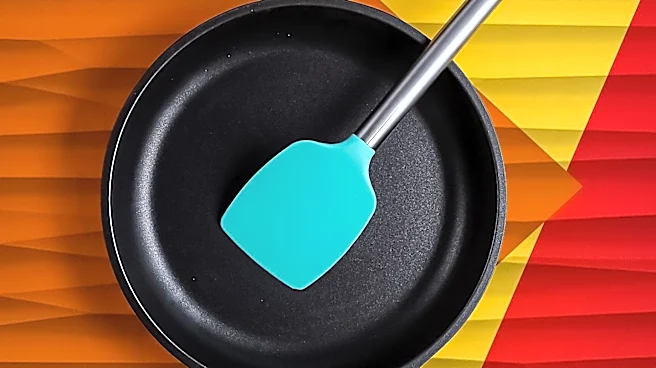
This development by WACKER Group holds significant implications for U.S. manufacturing sectors, particularly those involved in medical devices, food processing equipment, and consumer goods for infants. The ability to produce hard/soft composite parts without post-curing streamlines manufacturing processes, potentially reducing production costs and energy consumption for U.S. companies. The self-adhesive properties of ELASTOSIL LR 5471 allow for efficient mass production of composite parts through overmolding, eliminating the need for surface treatment of hard components. This can lead to faster production cycles and improved efficiency for U.S. manufacturers. Furthermore, the product's compliance with stringent food contact regulations and its suitability for medical and infant care applications mean that U.S. companies can integrate this material into products requiring high safety and quality standards, enhancing product reliability and market competitiveness. The mechanical strength and elasticity of the silicone rubber also open doors for its use in demanding applications like gaskets and flexible scrapers, benefiting various industrial segments in the U.S.
What's Next?
The introduction of ELASTOSIL LR 5471 at FAKUMA will likely lead to increased adoption of this non-postcure silicone rubber in U.S. manufacturing. Companies in the food, medical, and infant care sectors will explore integrating this material into their production lines to leverage its efficiency and compliance benefits. WACKER's presentation at FAKUMA will provide further details on the product's unique selling propositions and processing advantages, which could drive interest and potential partnerships with U.S. manufacturers. The product's availability in Shore A hardness grades 40 and 50 makes it versatile for various applications, suggesting a broad market penetration. Future developments may include further expansion of its application range as U.S. industries seek to optimize production processes and meet evolving regulatory standards for material safety and performance. The focus on reducing volatile content and eliminating post-curing aligns with broader industry trends towards more sustainable and efficient manufacturing practices.
Beyond the Headlines
The innovation in silicone rubber technology, particularly the elimination of post-curing, represents a deeper trend towards 'smart materials' that simplify manufacturing while enhancing product performance and safety. This advancement could influence material science research and development in the U.S., pushing for similar efficiencies in other polymer and chemical applications. The emphasis on compliance with food contact regulations and suitability for sensitive applications like medical devices highlights the increasing scrutiny on material safety and biocompatibility. This could set new benchmarks for material selection and regulatory adherence across various U.S. industries. Moreover, the self-adhesive feature could inspire new design possibilities for composite materials, fostering innovation in product engineering and assembly techniques, ultimately leading to more integrated and durable products in the U.S. market.