
What's Happening?
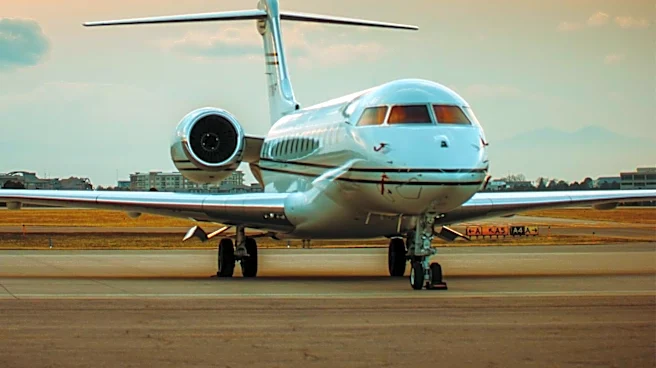
Howard Schultz's private jet, a 2024 Gulfstream G700 with tail number N211HS, landed at Francis S Gabreski Airport in Westhampton Beach, New York, on November 24, 2026. The flight originated from Teterboro
Airport and lasted 29 minutes, covering a distance of 67 nautical miles. This marks the first recorded landing of N211HS at Westhampton Beach in 13 tracked flights since September 24, 2026. The aircraft's home base is King County International Airport - Boeing Field in Seattle, though its recent common destinations include Miami International Airport and Teterboro. The flight consumed an estimated 206 gallons of fuel, producing approximately 2.0 metric tons of CO2. Schultz, the former Starbucks CEO and chairman emeritus, has an estimated net worth of $3.4 billion. He reportedly moved to Miami in March 2026, around the same time Washington state enacted a 9.9 percent tax on income over $1 million, though his aircraft's registration remains tied to Seattle.
Why It's Important?
The flight of Howard Schultz's private jet highlights the travel patterns of high-net-worth individuals and the associated environmental impact. The short duration and distance of the flight, while consuming a significant amount of fuel and producing CO2, underscore ongoing discussions about private aviation's carbon footprint. For local communities like Westhampton Beach, a common destination for private aircraft serving the Hamptons, such flights are a regular occurrence, impacting local air traffic and potentially contributing to noise and environmental concerns. The detail about Schultz's move to Miami coinciding with a new state tax in Washington also touches upon broader themes of wealth migration and tax policy, though the source does not explicitly link the two as cause and effect. The use of private jets by prominent business figures often draws public attention, fueling debates about economic inequality and environmental responsibility.
What's Next?
While no specific public appearances or events were found for Howard Schultz near Westhampton Beach at the time of the flight, his continued use of private air travel is likely to remain a point of interest for those tracking the movements of prominent business leaders. The broader conversation around the environmental impact of private aviation is expected to continue, potentially leading to increased scrutiny or calls for policy changes regarding fuel efficiency and emissions. For airports like Francis S Gabreski, continued private jet traffic will necessitate ongoing management of air traffic control, infrastructure, and community relations. The registration of Schultz's aircraft remaining in Seattle despite his reported move to Miami could also be a point of interest for those monitoring corporate and personal tax domiciles, though no immediate action or consequence is indicated.
Beyond the Headlines
The flight of Howard Schultz's private jet, while seemingly a routine travel event, subtly touches upon several deeper societal and economic implications. The choice of private air travel by ultra-high-net-worth individuals like Schultz reflects a lifestyle that often operates outside the norms of public transportation, raising questions about accessibility, privilege, and resource consumption. Environmentally, each private jet flight, regardless of its brevity, contributes to carbon emissions, feeding into the larger climate change discourse and the debate over individual versus systemic responsibility. Economically, the movement of wealthy individuals, as hinted by Schultz's reported move to Miami following a tax change in Washington, can have implications for state tax revenues and local economies. This event, therefore, serves as a micro-example of broader trends in wealth, environmental impact, and the mobility of capital and influential figures in the U.S.