






What's Happening?
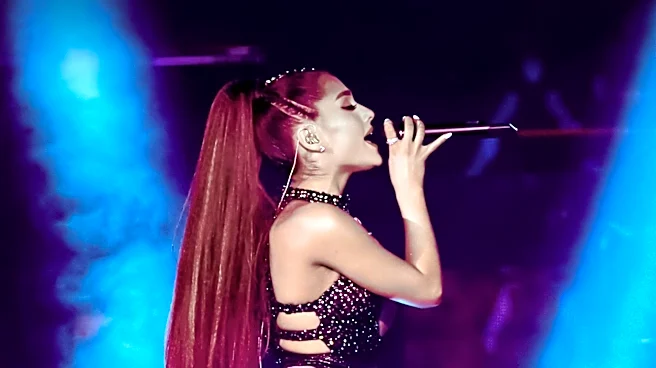
Ariana Grande's beauty brand, r.e.m. beauty, launched in partnership with Forma Brands, experienced significant financial challenges when Forma Brands filed for bankruptcy. Despite r.e.m. beauty's initial success, with projected revenues of $84 million,
it was drawn into Forma Brands' bankruptcy proceedings, which involved $868 million in debt. This situation forced Grande to repurchase her own assets for $15 million to regain control of her brand. The partnership, initially seen as a strategic advantage combining Grande's massive following with Forma's manufacturing and distribution expertise, ultimately became a vulnerability for r.e.m. beauty. This incident highlights the risks celebrity brands face when relying on corporate partners for operational infrastructure.
Why It's Important?
This event underscores the inherent risks in celebrity-corporate partnerships within the beauty industry. While such collaborations offer celebrities access to established manufacturing and distribution networks, they also expose their brands to the financial instability of their partners. For consumers, this situation could lead to uncertainty regarding the future availability of r.e.m. beauty products, potentially impacting brand loyalty and market perception. For the broader beauty and celebrity brand landscape, it serves as a cautionary tale, emphasizing the need for robust legal and financial structures to protect celebrity assets and brand integrity. The $15 million buyback by Grande illustrates the substantial personal investment celebrities might need to make to safeguard their ventures when partnerships falter, affecting their financial planning and brand control.
What's Next?
Following the buyback of her assets, Ariana Grande is expected to continue operating r.e.m. beauty independently or seek new, more secure partnerships. The brand will likely focus on rebuilding its operational stability and reassuring its customer base about its long-term viability. This could involve strategic marketing campaigns to re-establish trust and potentially a re-evaluation of its supply chain and distribution channels. Other celebrity brands and their corporate partners may review their existing agreements and future collaboration models to mitigate similar risks, potentially leading to more stringent contractual clauses and due diligence processes in the industry. The incident may also prompt increased scrutiny from investors and consumers regarding the financial health of companies behind celebrity-backed ventures.
Beyond the Headlines
The r.e.m. beauty situation reveals a deeper trend in the celebrity brand ecosystem: the delicate balance between leveraging corporate infrastructure for rapid growth and maintaining creative and financial control. While the allure of a large corporation's resources is undeniable, the case of r.e.m. beauty demonstrates that such partnerships can transform into significant liabilities. This incident could influence how future celebrity-brand deals are structured, potentially leading to more equity-based arrangements or stricter clauses protecting the celebrity's stake. It also highlights the increasing financial literacy and business acumen required of celebrities venturing into entrepreneurship, moving beyond mere endorsement deals to active brand ownership and management. The episode may also spark discussions about the ethical responsibilities of larger corporations towards their smaller, celebrity-backed partners, especially during financial distress.