






What's Happening?
The microbial food industry is undergoing a significant transformation, moving its primary focus from laboratory-level productivity to achieving manufacturing readiness for commercialization. Researchers from KAIST, led by Distinguished Professor Sang
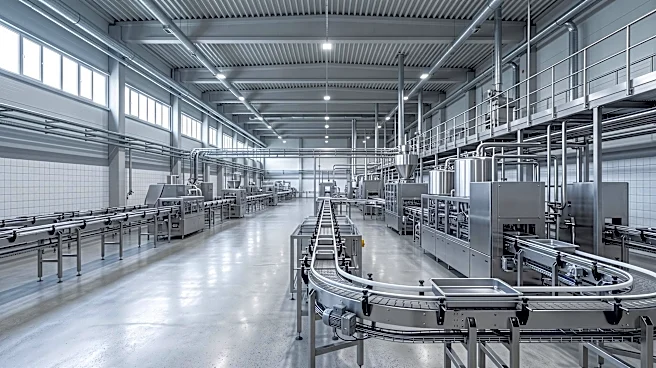
Yup Lee, along with SilicoBio, a KAIST faculty startup, have analyzed the critical conditions for the industry's success across manufacturing, market entry, and regulatory compliance. Their study, published in the journal One Earth, emphasizes that future competitiveness will depend less on individual technological breakthroughs and more on the ability to build integrated manufacturing platforms. Key factors identified for commercialization include a stable raw material supply, robust quality control, effective management and safety assurance for non-model microorganisms, reduction of downstream processing costs, and regulatory compliance for byproduct recycling. The study highlights that manufacturing readiness refers to the capability to reliably produce laboratory-developed technology at an industrial scale, while non-model microorganisms are those with high industrial potential but limited research infrastructure. Downstream processing involves the separation, purification, concentration, and drying of target components post-fermentation.
Why It's Important?
This shift in focus is crucial for the U.S. food industry and its consumers, as it directly impacts the availability and affordability of next-generation protein sources. The emphasis on manufacturing readiness means that companies must invest heavily in scaling up production processes, which could lead to significant capital expenditure and the development of new industrial infrastructure. For consumers, this could translate to a wider variety of sustainable food options, but also potentially higher initial costs as the industry matures. The need for predictable regulatory approval procedures and swift market entry is particularly important for U.S. companies and investors, as it influences investment decisions and the pace at which these innovative products reach the market. The study also suggests that microbial foods are not just an alternative protein source but could become a core platform for precision fermentation-based functional food ingredients, high-value biomaterials, and circular biomanufacturing, potentially reshaping multiple sectors beyond just food.
What's Next?
The microbial food industry is expected to prioritize the development of integrated manufacturing platforms that optimize the entire production process, from strain development to product formulation. Companies will likely focus on securing stable raw material supplies and implementing stringent quality control measures to ensure product consistency and safety. Regulatory bodies in the U.S. will face increasing pressure to establish clear and predictable approval pathways for these novel food products, which will be critical for accelerating market entry and fostering investor confidence. Furthermore, the industry will need to address consumer preferences beyond environmental sustainability, focusing on taste, texture, familiarity, and safety to drive widespread adoption. The potential for microbial foods to evolve into a broader biomanufacturing platform suggests future collaborations and innovations across the food, materials, and biomanufacturing industries, with a strong emphasis on sustainable practices and resource utilization.
Beyond the Headlines
The deeper implications of this industrial shift extend to national biomanufacturing competitiveness and the global sustainable food industry. The study underscores that the U.S. and other nations are in a race to build industrialization ecosystems that effectively connect core technologies to real production and markets. This competition is not just about technological prowess but also about establishing robust supply chains, efficient manufacturing processes, and supportive regulatory frameworks. The ethical considerations surrounding genetically modified microorganisms, the long-term health impacts of novel food ingredients, and the equitable distribution of these new food sources will become increasingly prominent. Culturally, the acceptance of microbial foods will depend on overcoming consumer skepticism and integrating these products into existing dietary habits. This evolution could lead to a fundamental redefinition of food production, moving towards more controlled, efficient, and environmentally sustainable systems, but also raising questions about food sovereignty and the role of large corporations in shaping future food landscapes.