






What's Happening?
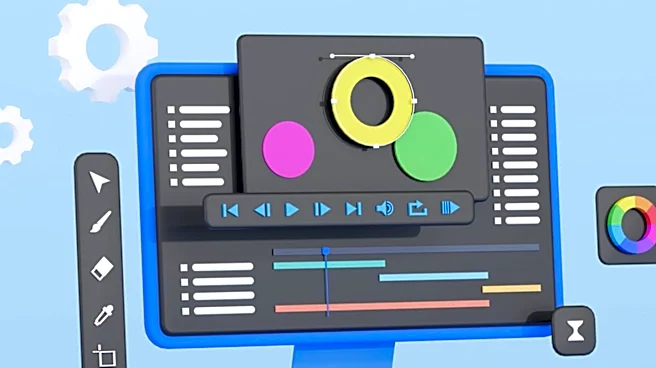
Descript, an AI-powered video and audio editor, allows users to edit media by manipulating text. The software transcribes video and audio recordings using artificial intelligence, enabling a unique text-based editing workflow. This approach contrasts
with traditional editors like Adobe Premiere Pro, which offer deep multi-track timeline control. Descript's method allows users to delete a sentence in the transcript, which in turn removes the corresponding footage or audio. This feature is particularly beneficial for creators whose content heavily relies on dialogue, such as podcasters, interviewers, and marketing teams, as it significantly speeds up the process of assembling first drafts and removing conversational pauses. The company is also actively recruiting for remote software engineering positions worldwide, indicating a focus on expanding its technological capabilities and global reach.
Why It's Important?
The emergence of Descript's text-based editing paradigm represents a significant shift in the video and audio editing industry, particularly for content creators focused on spoken dialogue. This innovation democratizes video and audio production by making it more accessible to individuals without extensive technical editing skills. By simplifying the editing process to resemble text document manipulation, Descript reduces the learning curve and time investment typically associated with professional editing software. This can lead to increased content output and efficiency for podcasters, educators, and marketing professionals. The global hiring initiative for software engineers also signals a growing demand for AI-driven tools in creative industries and highlights the ongoing competition and innovation in the software development sector, potentially influencing future trends in media production tools.
What's Next?
Descript is expected to continue refining its AI transcription and text-based editing features, potentially integrating more advanced AI capabilities to further automate and streamline the editing workflow. The company's global recruitment for software engineers suggests an expansion of its development team, which could lead to new features, improved performance, and broader platform compatibility. This ongoing development could challenge the dominance of traditional non-linear editors by offering a more intuitive and efficient alternative for specific types of content. As AI technology advances, Descript may explore further integrations with other creative tools or develop more sophisticated AI-driven content generation features, potentially reshaping how video and audio content is produced and distributed.
Beyond the Headlines
The rise of AI-powered editing tools like Descript raises broader questions about the future of creative work and the skills required in media production. While these tools offer unprecedented efficiency, they also prompt discussions about the balance between automation and human creativity. The ability to edit media by simply editing text could lead to a re-evaluation of traditional editing workflows and the role of professional editors. Furthermore, the accuracy and ethical implications of AI-generated content, such as voice synthesis and automated transcription, will become increasingly important considerations. As these technologies become more sophisticated, there will be a growing need for clear guidelines and best practices to ensure responsible and ethical use in content creation.