

What's Happening?
Elyse Johnson, owner of Van Goat Studios in Dunn, North Carolina, has experienced significant growth in her mural business during and after the COVID-19 pandemic. Johnson, who started Van Goat Studios in 2019, initially with a business partner, found
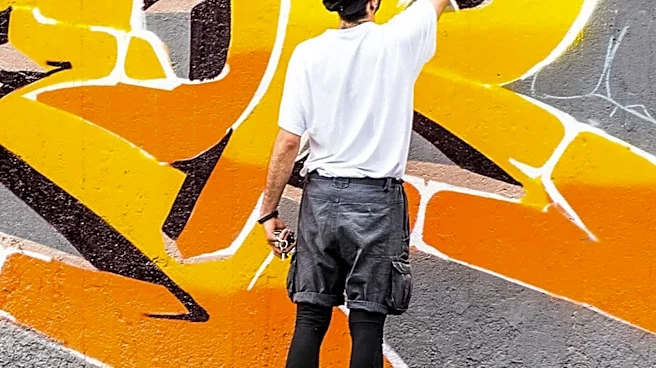
herself independently growing the venture when her partner decided to pursue other artistic forms. She credits the pandemic with building her confidence and creating unexpected opportunities. One of her early projects was a Farmers Day mural for the town of Coats, which utilized savings from their canceled annual festival to fund a community art initiative without gathering people. This project led to further word-of-mouth referrals, allowing Johnson to organically approach new projects. She specializes in traditional murals and 'portable murals,' which are framed wooden pieces that can be installed on various structures. Johnson's focus is on creating accessible art for smaller communities and businesses, rather than pursuing large-scale projects in major cities.
Why It's Important?
This development highlights a unique economic and social impact of the COVID-19 pandemic, demonstrating how some individuals and small businesses found unexpected avenues for growth and community engagement amidst widespread disruption. Johnson's success in Harnett County illustrates a shift in local community investment, where funds previously allocated for events were redirected towards public art, providing both economic opportunity for artists and aesthetic benefits for residents. Her commitment to 'the little guys' and making art accessible underscores a broader trend of localism and community-focused initiatives gaining traction. This approach not only supports local economies but also enriches cultural landscapes in smaller towns, potentially fostering a stronger sense of community identity and pride. The story also showcases the resilience and adaptability of entrepreneurs in navigating challenging economic periods, turning adversity into a catalyst for business expansion and community service.
What's Next?
Johnson plans to continue expanding Van Goat Studios, with a long-term vision for its longevity and succession. As a new mother, she aims to build the business to a point where it can sustain itself, allowing her more flexibility as her daughter grows. She also expresses a desire to mentor aspiring artists, offering lessons that combine artistic skill development with practical business scenarios. This includes teaching students how to balance creative expression with client needs and budget constraints, preparing them for the realities of the art market. Johnson hopes to eventually pass on her business to a student or intern, ensuring the continuation of her community-focused art legacy. Her ongoing efforts will likely involve seeking out more projects that benefit small businesses and municipalities, further embedding public art into the fabric of North Carolina's smaller communities.
Beyond the Headlines
The narrative of Van Goat Studios extends beyond a simple business success story; it touches upon the evolving role of art in community development and economic recovery. In the aftermath of a global crisis, art, often perceived as a luxury, became a tool for community cohesion and a source of local pride. Johnson's emphasis on accessibility and working with smaller entities challenges the traditional art market's focus on high-value, urban-centric projects. This approach could inspire other artists to consider how their work can directly benefit and reflect the unique character of their local communities. Furthermore, her dedication to teaching the business aspects of art to students addresses a critical gap in art education, preparing future artists not just as creators but as sustainable entrepreneurs. This model fosters a more grounded and community-integrated artistic ecosystem, potentially leading to a broader appreciation and investment in local arts.