








What's Happening?
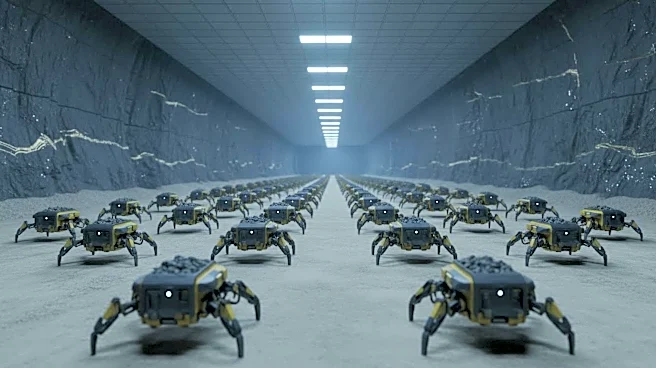
Researchers from the University of Adelaide have developed bio-inspired swarm robotics strategies to improve the efficiency of autonomous mining operations. These strategies, inspired by the collective behavior of ants and honeybees, aim to enhance productivity,
reduce energy consumption, and improve operational safety in mining systems. The study, published in Natural Sciences, evaluated three robotic strategies for transporting ore along simulated mine haul routes. The 'honeybee strategy' proved most effective, reducing travel distance by up to 80% and energy consumption by approximately 50%. The research highlights the potential of decentralized swarm control to improve exploration, ore collection, and material transport in mining operations.
Why It's Important?
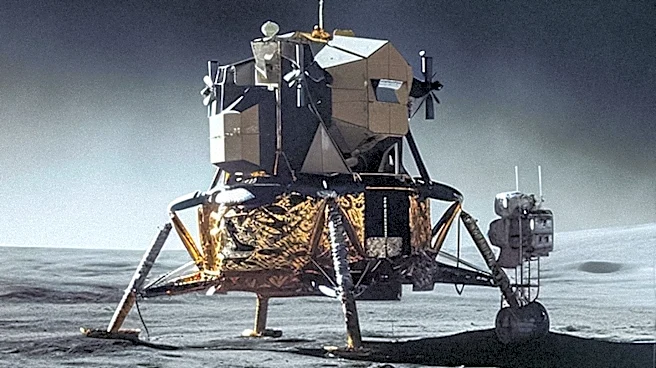
The development of bio-inspired swarm robotics could significantly impact the mining industry by increasing efficiency and reducing operational costs. By adopting decentralized control systems, mining operations can become more adaptable and responsive to dynamic environments, potentially leading to safer and more cost-effective practices. This innovation could also pave the way for autonomous resource extraction in space exploration, such as lunar or asteroid mining missions. The study's findings suggest that swarm robotics could address real engineering challenges, offering a more resilient approach to mining operations.
What's Next?
Future research is recommended to validate these algorithms on larger robotic platforms and under realistic operating conditions. This includes testing on multi-lane haul roads, rough terrain, and in environments with dust and communication delays. The researchers suggest that memory-based swarm control could support autonomous resource extraction during future space missions. As the mining industry continues to explore deeper and more remote deposits, the adoption of swarm robotics could become a critical component in advancing mining automation.