




What's Happening?
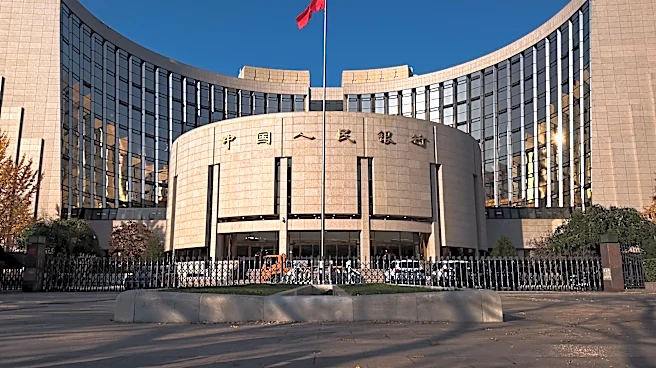
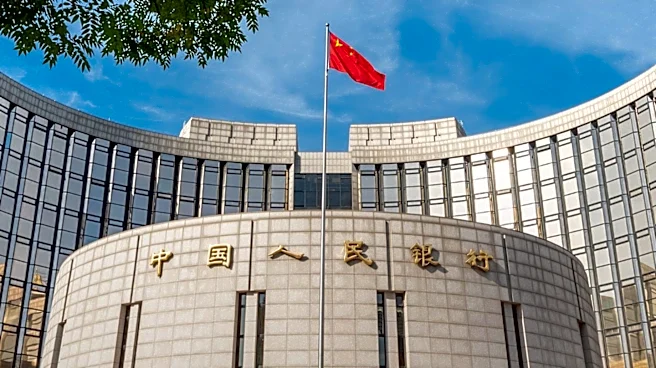
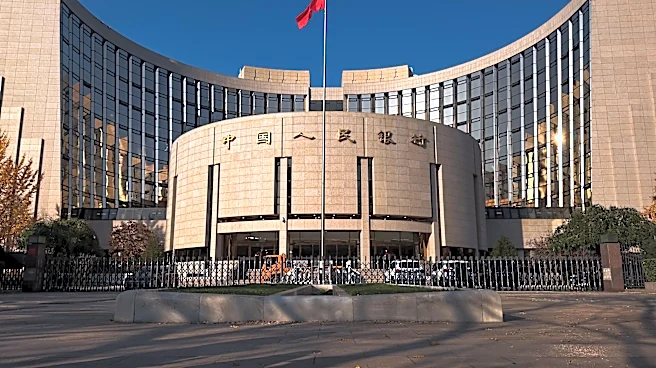
The People's Bank of China (PBOC) is maintaining low interest rates, signaling a shift in its monetary policy from financing an investment boom to managing a demand-constrained economy. China's one-year deposit rate at its largest banks has fallen to 0.95%
by May 2025, marking the first time it has dropped below 1%. This move comes as the country's real estate sector struggles to recover and debt burdens increase. The yield on China's 30-year government bond also fell below that of its Japanese equivalent in 2024. The PBOC views this as a transition from steering credit quantity to guiding its price, moving towards more market-driven funding rates. This policy adjustment is occurring in the aftermath of a historic credit boom, where total social financing surged from approximately 120% of GDP in 2002 to about 315% in 2025. Currently, local governments, corporations, and households are less inclined or able to borrow, largely due to the real estate downturn that began with President Xi Jinping’s deleveraging campaign in 2021.
Why It's Important?
This shift in China's monetary policy carries significant implications for the global economy, including potential ripple effects on U.S. industries and financial markets. China's sustained low interest rates, if they lead to prolonged economic stagnation similar to Japan's 'lost decades,' could reduce global demand for goods and services, impacting U.S. export-oriented sectors. The move also suggests that China is prioritizing domestic stability and growth over traditional investment-driven expansion, which could alter global supply chains and trade dynamics. For U.S. businesses operating in or with China, this could mean a more challenging market environment due to weakened consumer demand and increased competition from state-backed industries. Furthermore, if China's economic slowdown deepens, it could affect global commodity prices and investment flows, potentially influencing U.S. inflation and interest rate policies. The PBOC's efforts to steer credit towards new industries like advanced manufacturing, while potentially creating new opportunities, also risk exacerbating global overcapacity in certain sectors, which could lead to trade tensions.
What's Next?
The People's Bank of China is expected to continue its accommodative monetary policy, potentially easing further to stimulate growth. This includes efforts to accelerate the shift of household wealth from property to the stock market, as evidenced by the recent cut in the rate on its relending facility for share buybacks and stake increases to 1%, making the program permanent without a specific funding cap. However, the effectiveness of these measures hinges on Beijing's ability to boost household incomes, provide credible assets beyond property, and encourage consumer spending. Without these fundamental changes, cheap money alone may not revive demand, risking a prolonged period of stagnation. Major stakeholders, including international investors and global financial institutions, will closely monitor China's economic indicators and policy adjustments for signs of recovery or further slowdown. The Chinese government's continued promotion of advanced manufacturing as a new growth engine will also be a key area to watch, as it could lead to increased industrial capacity and potential trade imbalances.
Beyond the Headlines
The PBOC's current monetary strategy reflects a deeper structural challenge within the Chinese economy: the transition from an investment and export-led growth model to one driven by domestic consumption. The reliance on property as a primary wealth vehicle for households has proven unsustainable, leaving a significant void that the stock market is being pushed to fill, despite its inherent volatility. This situation highlights the ethical and economic dilemma of a state-controlled financial system attempting to engineer wealth creation and demand. The long-term implications could include a re-evaluation of global economic interdependence, as China's domestic economic health increasingly dictates global market conditions. Furthermore, the potential for 'Japanification with Chinese characteristics' – combining weak demand with formidable industrial production – could lead to unique global economic challenges, including persistent deflationary pressures and intensified competition in manufacturing sectors worldwide. This scenario also raises questions about the future of global capital flows and the attractiveness of China as an investment destination.