







What's Happening?
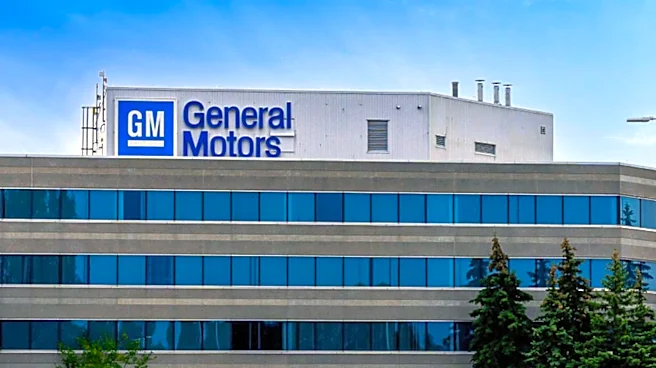
General Motors (GM) recently saw its stock drop by 7% from a 52-week high following the filing of New York's portion of a $220 million multistate settlement. This settlement addresses allegations that GM sold 'Smart Driver' data to Verisk and LexisNexis
Risk Solutions, which then created driver reports for insurance companies. The New York Attorney General, Letitia James, stated that GM's OnStar app incorrectly informed over 370,000 drivers that they were not enrolled in data collection, while the company continued to gather and sell their data. GM ended the 'Smart Driver' program in 2024 and settled the case without admitting liability. The agreement, announced on October 29 by 35 states and Washington, D.C., requires GM to pay the $220 million within 30 days of the November 30 effective date, obtain express consent before collecting or sharing driving and location data, and implement a privacy program reviewed by an independent assessor. Despite the settlement, GM's third-quarter net income reached $3.3 billion, significantly outweighing the settlement cost.
Why It's Important?
This settlement highlights growing concerns over consumer data privacy within the automotive industry, particularly as vehicles become more connected and generate vast amounts of driver data. For GM, while the financial impact of the $220 million settlement is relatively small compared to its quarterly profits, the broader implications for consumer trust are significant. GM is actively promoting services like OnStar and Super Cruise as future growth engines, both of which rely heavily on driver data. A breach of trust regarding data privacy could undermine the adoption and success of these key initiatives, potentially affecting the company's long-term valuation and its ability to compete in the connected vehicle market. The case also sets a precedent for how automotive manufacturers must handle sensitive driver information, emphasizing the need for clear consent and robust privacy practices to avoid legal repercussions and maintain consumer confidence. The ongoing scrutiny, including a similar driver data lawsuit in Texas, indicates a trend of increased regulatory and public attention on data handling in the auto sector.
What's Next?
Following the settlement, GM is mandated to implement stricter privacy protocols, including obtaining express consent for data collection and sharing, and establishing a privacy program overseen by an independent assessor. The company's commitment to these new practices will be crucial in rebuilding consumer trust, especially as it continues to develop and market data-dependent services like OnStar and Super Cruise. Investors will be closely watching GM's fourth-quarter results, due on January 27, which will include its 2027 outlook. This report will indicate whether the company can sustain profit growth amidst external challenges such as tariff and warranty costs. The market's reaction to GM's future guidance on profit growth will likely influence its stock multiple. Furthermore, the ongoing lawsuit in Texas regarding driver data suggests that GM and other automakers may face continued legal challenges and increased regulatory pressure concerning data privacy in the coming years.
Beyond the Headlines
The General Motors data settlement underscores a broader societal shift towards greater awareness and demand for data privacy, extending beyond tech companies to traditional industries like automotive. This event highlights the evolving legal and ethical landscape surrounding personal data in an increasingly connected world. As vehicles transform into mobile data centers, the ethical implications of collecting, sharing, and monetizing driver behavior data become more pronounced. Questions arise about data ownership, the extent of informed consent, and the potential for discriminatory practices based on driving profiles. This case could prompt a re-evaluation of industry-wide data collection practices and lead to more stringent regulations, potentially impacting the development of autonomous vehicles and personalized in-car services. The long-term shift could see consumers demanding more control over their vehicle data, pushing automakers to adopt transparent and privacy-centric business models as a competitive advantage rather than a regulatory burden.