



What's Happening?
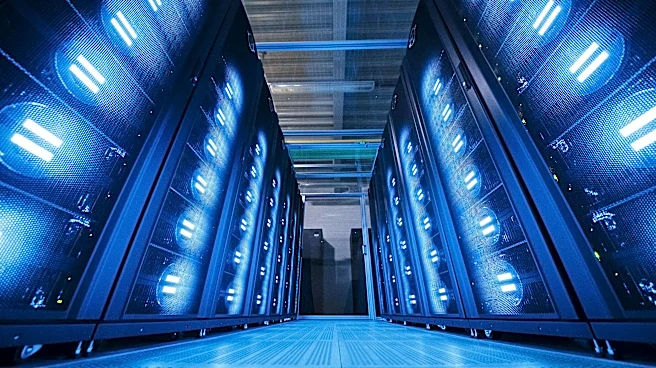
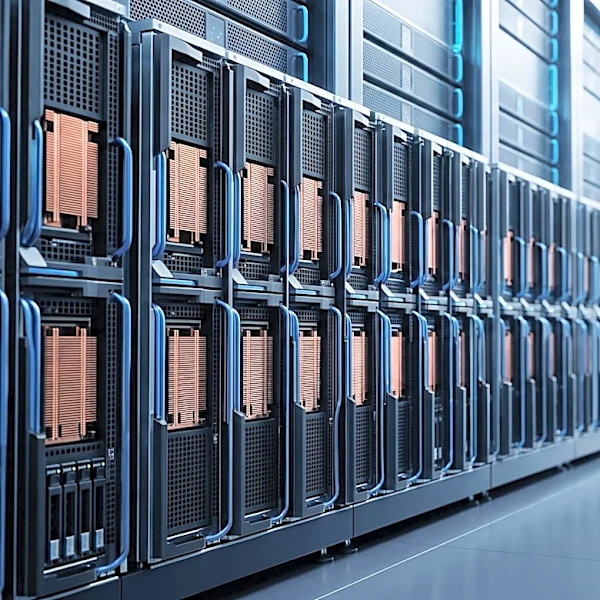
Several prominent Bitcoin mining companies, including IREN, Core Scientific, and TeraWulf, are significantly reducing their Bitcoin mining operations and reallocating resources towards Artificial Intelligence (AI) and High-Performance Computing (HPC)
services. In the third quarter, these companies collectively saw their AI-cloud and HPC colocation revenue nearly double to approximately $478 million. Concurrently, their combined realized Bitcoin hashrate decreased by almost 49%. IREN and Core Scientific have made the most substantial shifts towards AI services. TeraWulf's HPC revenue nearly doubled, and Bitdeer increased its share of Bitcoin rewards as its peers scaled back mining activities. This operational pivot is also contributing to a growing hardware overhang due to the conversion and disposal of mining equipment.
Why It's Important?
This strategic shift by major Bitcoin mining companies signifies a significant evolution within the digital asset industry, moving beyond pure cryptocurrency mining to leverage existing infrastructure for more diverse and potentially more stable revenue streams. The pivot towards AI and HPC services indicates a recognition of the growing demand for computational power in these sectors, offering a new avenue for profitability for companies that possess large-scale data center capabilities. For the U.S. economy, this could mean a diversification of the tech sector, with former mining facilities transforming into critical infrastructure for AI development and research. It also highlights the increasing convergence of blockchain technology infrastructure with broader technological advancements, potentially attracting new investors and fostering innovation in both AI and high-performance computing. This could also impact the energy consumption profile of these companies, as AI/HPC workloads might have different energy demands and stability requirements compared to Bitcoin mining.
What's Next?
The trend of Bitcoin miners transitioning to AI and HPC services is likely to continue, especially as the demand for AI computing power grows. Companies that successfully adapt their infrastructure and business models could see sustained growth and increased investor confidence. This shift may also lead to further consolidation in the mining sector, as smaller or less adaptable firms struggle to compete. The 'hardware overhang' from repurposed mining equipment could create a secondary market for specialized computing hardware, impacting supply chains and pricing. Furthermore, this strategic pivot could influence how energy grids are planned and utilized, as these facilities transition from intermittent, price-sensitive mining loads to more consistent, high-demand AI/HPC operations. Regulatory bodies might also begin to examine the implications of this convergence, particularly concerning data privacy, energy consumption, and market concentration in the AI infrastructure space.
Beyond the Headlines
The move by Bitcoin miners into AI and HPC services represents a broader economic and technological re-evaluation of specialized computing infrastructure. It suggests that the underlying assets—data centers, power infrastructure, and cooling systems—are more versatile than initially perceived, capable of supporting diverse high-compute applications beyond cryptocurrency. This adaptability could make these companies more resilient to fluctuations in Bitcoin's price and mining profitability. It also underscores the increasing importance of computational resources as a fundamental utility in the digital age, akin to electricity or internet access. The ethical implications of providing computing power for advanced AI, including potential uses in surveillance or autonomous systems, could also become a more prominent consideration for these companies and their stakeholders. This evolution could redefine the identity of these firms, moving them from niche crypto players to broader technology infrastructure providers.