







What's Happening?
The wheat market is experiencing a downturn following gains made on Thursday, as tensions in the Black Sea region continue to impact trading. On Thursday, wheat futures saw an increase across three major exchanges, driven by geopolitical tensions. However,
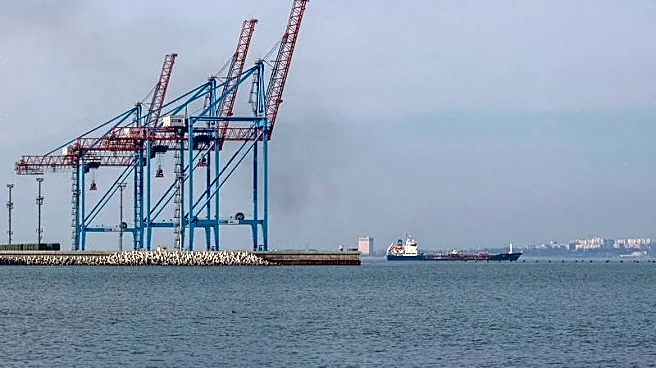
by Friday, the market began to retract some of these gains. The Chicago SRW contracts, KC HRW futures, and MPLS spring wheat all showed varying degrees of increase on Thursday, but open interest changes suggest a mixed market sentiment. A significant factor contributing to the market's volatility is a recent Ukrainian drone strike on a Russian grain export terminal in Taman, located on the Kerch Strait, which caused substantial damage. Additionally, export sales data revealed a marketing year low for wheat sales, with only 285,165 metric tons sold in the week of July 23, 2026, marking a significant decrease compared to the same period last year. The European Commission has also adjusted its wheat production and export estimates downward, further influencing market dynamics.
Why It's Important?
The current fluctuations in the wheat market have significant implications for global food supply and trade. The geopolitical tensions in the Black Sea region, particularly the Ukrainian drone strike, highlight the vulnerability of agricultural supply chains to conflict. This situation could lead to increased volatility in wheat prices, affecting both producers and consumers worldwide. The reduction in export sales and the European Commission's lowered production estimates suggest potential supply constraints, which could drive prices higher if demand remains steady. For U.S. farmers and exporters, these developments may present both challenges and opportunities. While reduced competition from European exports could benefit U.S. wheat exporters, the overall market uncertainty may complicate planning and pricing strategies.
What's Next?
Looking ahead, the wheat market will likely continue to be influenced by geopolitical developments in the Black Sea region. Stakeholders will be closely monitoring any further escalations or resolutions that could impact grain exports. Additionally, market participants will be watching for updates on export sales and production forecasts, which could provide further insights into supply and demand dynamics. U.S. policymakers and agricultural industry leaders may need to consider strategies to mitigate the impact of international tensions on domestic markets, potentially exploring alternative trade routes or partnerships to ensure stability.