
What's Happening?
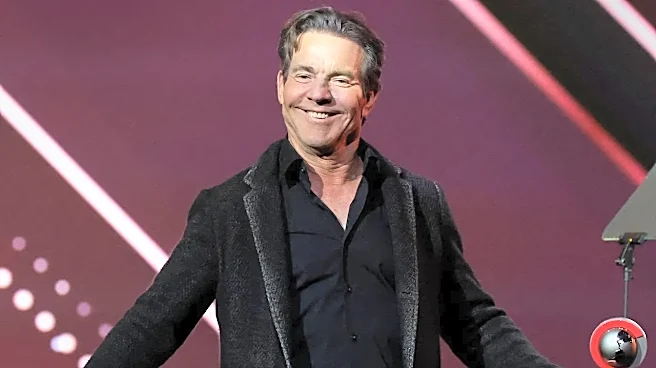
YouTube's business model, which relies on not directly paying for content but offering a revenue share to creators, is facing increasing scrutiny. Comedian and YouTuber Adam Conover describes the platform
as 'grotesquely exploitative,' arguing that it has become a more powerful gatekeeper than traditional media networks. While YouTube boasts an estimated catalog of over 10 billion to 29 billion videos, with 500 hours uploaded every minute, only a small fraction gains significant traction. Many creators struggle with video performance due to inadequate strategy, including ineffective titles, thumbnails, and hooks. Conover highlights that traditional television categories like news, talk shows, and lifestyle programming have largely migrated to YouTube, where content is free, and creators often operate with minimal budgets. This shift has led to the erosion of the 'middle' in media production, where shows with moderate budgets and unionized crews are increasingly rare, forcing creators into entrepreneurial roles.
Why It's Important?
This situation is important because it reveals a significant power imbalance in the digital media landscape, impacting creators, the entertainment industry, and the quality of content. YouTube's model incentivizes an 'infinite free content' ecosystem, which undermines traditional media's ability to fund high-quality productions with unionized labor. The platform's algorithmic control acts as a new, opaque gatekeeper, making it difficult for creators to gain visibility without conforming to its demands. This economic pressure forces many creators to prioritize viral content over diverse or niche topics, potentially leading to a homogenization of online media. The decline of the 'middle class' of media production means fewer opportunities for writers, performers, and technicians, pushing many out of the industry or into precarious freelance work. This shift also affects consumers, who increasingly rely on free, algorithm-driven content, potentially lowering expectations for production quality and journalistic integrity.
What's Next?
The future of content creation on YouTube may see continued pressure on creators to adapt to the platform's algorithmic demands and seek alternative funding models. Adam Conover, for instance, is attempting to build a business model that can support a team of writers and potentially unionize his YouTube channel, aiming to recreate a more sustainable production environment. There's a growing recognition that YouTube is evolving into a television-like platform, with potential for increased ad dollars and investment in higher production value. However, this evolution is slow, with YouTube primarily acting as a 'cable company' that benefits from creators handling their own business development and brand deals. The broader media industry may continue to grapple with how to compete with YouTube's free content model, potentially leading to further consolidation or innovative approaches to content funding and distribution. Discussions around labor organization within larger YouTube channels and potential government regulation regarding gig workers in the creator economy could also emerge as creators seek more equitable terms.
Beyond the Headlines
The implications extend beyond immediate economic concerns, touching upon fundamental shifts in artistic freedom, labor rights, and the nature of media consumption. The 'creator' label, as Conover argues, can mask an exploitative economic bargain, reframing traditional media labor as individual entrepreneurship. This individualization makes collective bargaining difficult, leaving creators with little leverage against powerful platforms. The reliance on algorithms for content discovery raises ethical questions about censorship, content diversity, and the potential for echo chambers. Furthermore, the pressure to integrate brand sponsorships directly into content blurs the lines between entertainment and advertising, potentially eroding audience trust and journalistic independence. The long-term impact could be a media landscape where content quality is dictated by algorithmic virality and brand partnerships rather than artistic merit or public interest, fundamentally altering how information and entertainment are produced and consumed.