





What's Happening?
MARA Holdings, a prominent Bitcoin mining company, has sold 13,597 BTC for approximately $1.1 billion after the third quarter ended. This move signifies a major shift from its previous strategy of accumulating Bitcoin. The company utilized $750 million
of the proceeds to repay Bitcoin-backed loans, which released 17,477 BTC previously held as collateral. This sale is part of a broader strategy to accelerate MARA's expansion into artificial intelligence (AI) infrastructure. Despite a 35% decline in quarterly revenue to $164.2 million, the company reported a net income of $632.1 million, primarily due to an $885.3 million fair-value gain on digital assets. MARA's decision reflects a wider trend among Bitcoin miners to seek liquidity for operations and capital-intensive expansion into AI and high-performance computing.
Why It's Important?
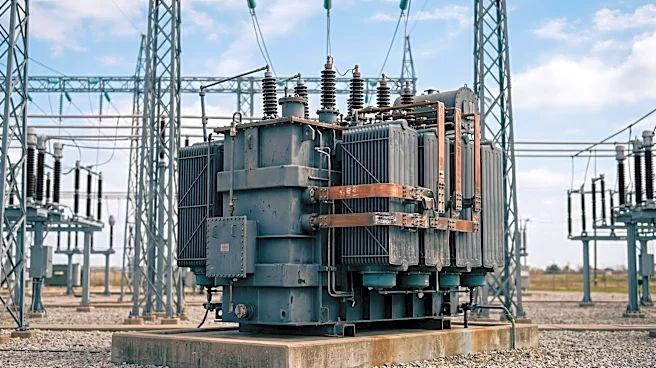
This strategic pivot by MARA Holdings highlights a significant shift within the Bitcoin mining industry, moving towards diversification into AI infrastructure. This trend is important for the U.S. business landscape as it indicates how companies are adapting to evolving technological demands and market conditions. By leveraging existing energy infrastructure and data center capabilities for AI, these companies aim to generate more predictable revenue streams, reducing their sole reliance on the volatile cryptocurrency market. This could lead to increased investment in AI data centers and high-performance computing within the U.S., creating new job opportunities and fostering technological innovation. However, it also signifies a potential decrease in the accumulation of Bitcoin by major miners, which could have implications for the broader cryptocurrency market and its stability. The move also reflects a recognition that access to electricity, a core asset for miners, is becoming increasingly valuable for AI companies.
What's Next?
MARA Holdings plans to continue using Bitcoin sales to build cash reserves for AI infrastructure opportunities, satisfy convertible note obligations, and potentially fund share repurchases. The company is actively pursuing customer agreements to secure more predictable infrastructure revenue and expects to complete its Long Ridge energy acquisition before year-end. Additionally, MARA has secured development rights for a Texas site with a potential capacity of up to 2 gigawatts, further solidifying its commitment to AI infrastructure. The company's Exaion unit has also signed a four-year, $79 million GPU-as-a-service contract with its first U.S. customer. This strategic direction suggests a future where MARA's business model will be less dependent on Bitcoin mining and more focused on providing AI and high-performance computing services, aligning with a broader industry trend of miners diversifying their operations.
Beyond the Headlines
The shift by Bitcoin miners like MARA into AI infrastructure raises deeper questions about the future of both industries. Ethically, it highlights the repurposing of energy-intensive operations, initially criticized for their environmental impact in cryptocurrency mining, towards another energy-intensive field like AI. This could lead to renewed scrutiny regarding energy consumption and sustainability in the tech sector. Legally, the transition may involve new regulatory frameworks for data centers and AI services, distinct from those governing cryptocurrency. Culturally, it signifies a growing convergence of previously disparate technological domains, where the underlying infrastructure for one cutting-edge technology can be adapted for another. This evolution could trigger long-term shifts in how energy resources are allocated and utilized across the U.S. tech landscape, potentially influencing policy decisions related to energy grids and technological development.