



What's Happening?
Multiway Robotics showcased five autonomous material handling solutions at CeMAT Asia 2026 in Shanghai, including a wheeled humanoid robot designed for flexible industrial operations. The exhibition, held from November 3 to 6, featured the company's H01
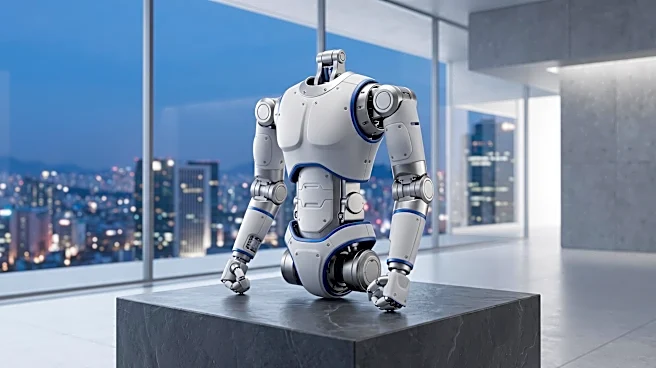
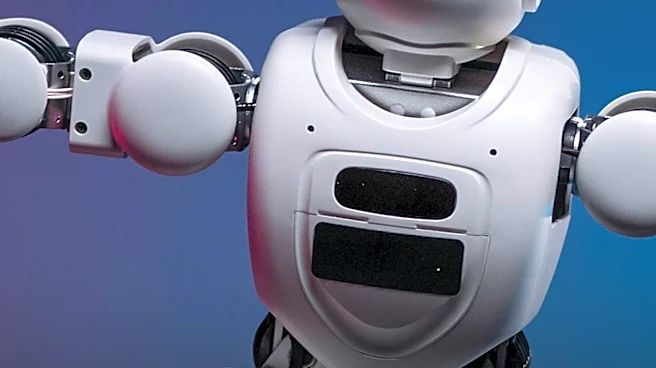
wheeled humanoid, an omnidirectional sideloader, a narrow-aisle forklift, an autonomous pallet truck, and a counterbalanced forklift for precision stacking. The H01 wheeled humanoid robot combines a mobile base with two collaborative robotic arms, offering a combined payload capacity of up to 30 kg. It demonstrated tote handling, highlighting its capability for tasks requiring both movement and dexterity in manufacturing and warehouse environments. Multiway also presented four autonomous forklifts tailored for specific intralogistics operations: the MW-O15 omnidirectional sideloader for long and heavy materials, the MW-K16 autonomous very narrow aisle forklift for high-density warehousing, the MW-CT15 autonomous pallet truck, and the MW-SE15 counterbalanced forklift for precision stacking. The company also highlighted its software portfolio, including the MW-RCS Robot Control System, MW-WCS Warehouse Control System, MW-WMS Warehouse Management System, and Multiway Cloud, designed to coordinate autonomous vehicles with warehouse operations.
Why It's Important?
The innovations presented by Multiway Robotics at CeMAT Asia 2026 are highly relevant to the U.S. manufacturing and logistics sectors. The introduction of advanced autonomous material handling solutions, particularly the wheeled humanoid robot and specialized autonomous forklifts, addresses critical needs for increased efficiency, safety, and flexibility in warehouses and factories. The H01 humanoid robot's ability to combine mobility with manipulation offers a versatile solution for tasks that traditionally require human intervention, potentially reducing labor costs and improving operational throughput in U.S. facilities. The specialized forklifts, designed for various applications from heavy material transport to high-density storage, can optimize space utilization and streamline intralogistics. These technologies can help U.S. businesses combat labor shortages, enhance supply chain resilience, and maintain competitiveness in a global market by adopting cutting-edge automation. The integrated software solutions also promise better coordination and management of robotic fleets, leading to more intelligent and responsive warehouse operations.
What's Next?
Multiway Robotics is expected to continue expanding its operations, which already span over 40 countries and regions, potentially increasing its presence in the U.S. market. The showcased technologies, particularly the wheeled humanoid and specialized autonomous forklifts, are likely to undergo further development and refinement based on industry feedback. The company's focus on integrating its hardware with a comprehensive software portfolio suggests a future where autonomous material handling systems are increasingly interconnected and managed through centralized platforms. U.S. logistics and manufacturing companies may explore pilot programs and wider adoption of these solutions to enhance their automation capabilities. The trend towards flexible and adaptable robotic systems, as exemplified by the H01 humanoid, indicates a future where industrial robots can perform a broader range of tasks, adapting to changing operational requirements.
Beyond the Headlines
The deployment of advanced robotics like Multiway's wheeled humanoid and autonomous forklifts carries significant long-term implications for the U.S. workforce and industrial landscape. While these technologies promise increased efficiency and productivity, they also raise questions about job displacement in sectors traditionally reliant on manual labor for material handling. This could necessitate significant retraining and upskilling initiatives for workers. Ethically, the increasing autonomy of robots in shared human-robot workspaces will require robust safety protocols and regulatory frameworks to ensure worker well-being. Culturally, the integration of humanoid robots into industrial settings could shift perceptions of automation and the role of robots in daily operations. Economically, widespread adoption could lead to a re-evaluation of supply chain strategies, potentially favoring highly automated domestic production over offshore manufacturing, thereby impacting global trade dynamics and fostering a new era of industrial automation in the U.S.