






What's Happening?
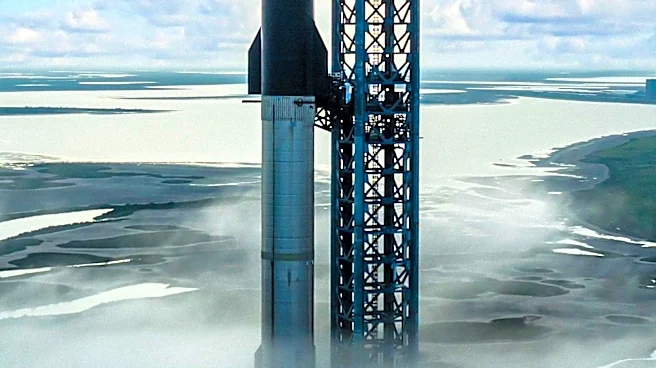
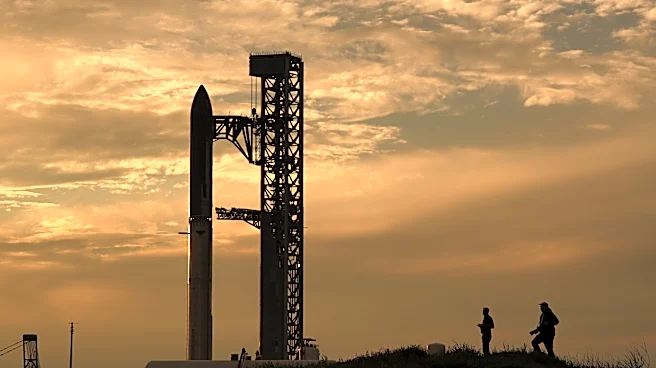
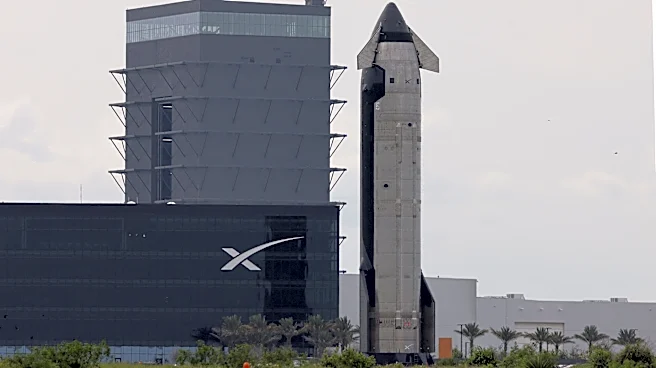
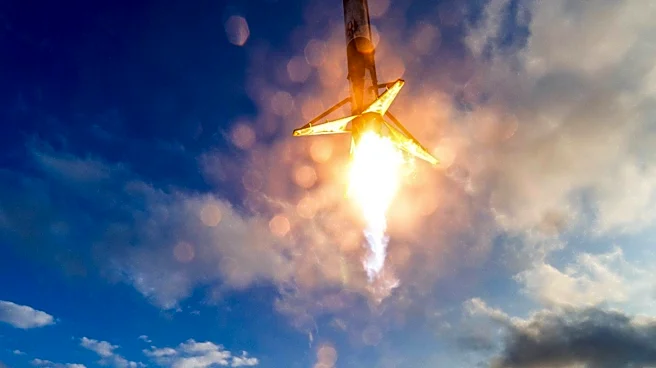
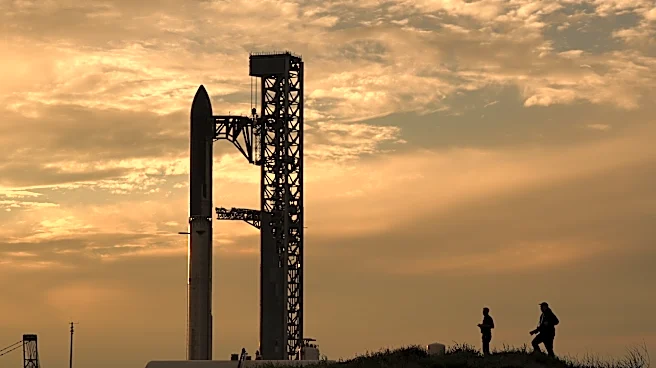
Space Exploration Technologies (SpaceX) has successfully executed the first mid-air recovery of an orbital-class spacecraft, catching the upper stage of its Starship rocket with tower-mounted mechanical arms. This achievement occurred after the Starship's
upper stage returned from a 22.5-hour orbital mission. This milestone directly supports SpaceX's foundational principle of reusability at scale, which is critical for the future economics of space launches, the deployment costs of its Starlink satellite internet constellation, and overall capital efficiency. The ability to reliably reuse large vehicles instead of rebuilding them is central to the company's long-term strategy. While this success marks a significant technical advancement, recent reports indicate that Starship development expenditures are impacting the Space segment, which recorded a quarterly loss despite overall group revenue growth. This highlights the substantial capital investment required for Starship and AI infrastructure development.
Why It's Important?
This successful orbital rocket catch is a pivotal development for the U.S. space industry and its economic landscape. SpaceX's reusability model aims to drastically reduce the cost of space access, potentially democratizing space travel and satellite deployment. Lower launch costs could accelerate the growth of various space-dependent industries, including telecommunications, Earth observation, and in-orbit manufacturing. For investors, the success of Starship's reusability is a key indicator of whether SpaceX's integrated Space, Connectivity, and AI segments can transition from rapid expansion to sustainable, high-margin cash generation. The financial viability of Starlink, which is currently generating cash flow, is crucial for funding the capital-intensive Starship and AI infrastructure projects. The ability to secure commercial contracts, such as the Air Tahiti Nui deal for Starlink, demonstrates the Connectivity unit's capacity to convert technical achievements into tangible revenue, which is essential for offsetting the significant development costs of Starship and AI compute.
What's Next?
The immediate focus for SpaceX will be to refine and scale the mid-air recovery process to ensure its reliability and cost-effectiveness for future missions. The financial impact of recent commercial deals, such as the Air Tahiti Nui contract for Starlink, is anticipated to materialize in 2027, providing crucial revenue streams to support ongoing development. Continued execution on Starship and AI compute will be the primary near-term swing factor for the company's financial performance. Investors will closely monitor whether the substantial capital expenditures in these areas can generate returns that exceed their funding costs. The company will need to demonstrate consistent progress in turning around large vehicles efficiently to validate its core reusability thesis and achieve profitability across its segments. Further airline partnerships and other commercial agreements for Starlink will be vital in bolstering the Connectivity unit's contribution to funding SpaceX's ambitious projects.
Beyond the Headlines
The successful mid-air catch by SpaceX represents more than just a technical feat; it signifies a potential paradigm shift in space exploration and commercial space operations. This advancement challenges traditional notions of expendable rocketry, pushing the industry towards a future where space access is routine and significantly less expensive. The ethical implications of increased space activity, such as orbital debris management and equitable access to space resources, will become more prominent as reusability makes launches more frequent. Furthermore, the integration of AI into SpaceX's operations, alongside its space and connectivity ventures, suggests a future where highly autonomous and interconnected systems play a larger role in space infrastructure. This could lead to new legal frameworks and international collaborations to govern increasingly complex and interdependent space assets, potentially reshaping global technological and economic power dynamics.