


What's Happening?
Lucasfilm President Kathleen Kennedy has reiterated her belief that the Star Wars franchise should continue to be developed for both theatrical releases and television streaming platforms. This stance comes amidst a period where Star Wars television output
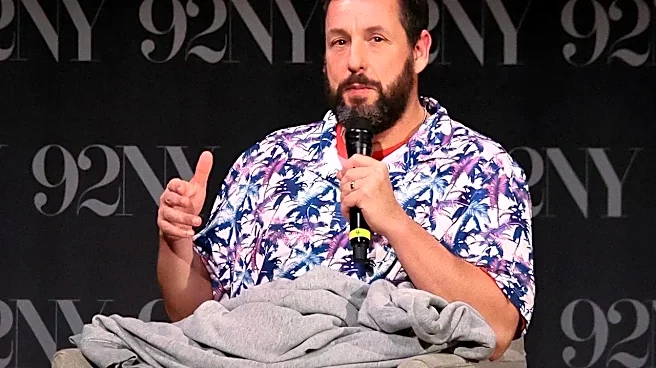
has slowed, and some projects have faced criticism or disappointing viewership, despite successes like 'Andor.' Kennedy emphasized that both formats offer distinct advantages for storytelling, with movies providing grand spectacle and event experiences, while television allows for long-form, nuanced exploration of the Star Wars universe. She noted that George Lucas himself was inspired by serialized storytelling, making television a natural fit for the franchise. This perspective was shared during a Bloomberg Live interview, where Kennedy discussed the realities of managing Star Wars and the balance between different media platforms.
Why It's Important?
Kathleen Kennedy's affirmation of a dual film and television strategy is significant for the future direction of the Star Wars franchise. It indicates that despite recent challenges and a perceived shift towards theatrical releases, Lucasfilm is committed to leveraging the unique strengths of both mediums. This approach aims to cater to diverse audience preferences, offering the cinematic grandeur that defines Star Wars on the big screen, while also providing the in-depth character and narrative development possible through streaming series. The financial realities of high-budget television productions, which have sometimes not aligned with audience reception, have led to a re-evaluation of investment. However, Kennedy's position suggests that abandoning television would mean losing a valuable storytelling avenue that has produced compelling material and expanded the franchise's mythology, as seen with 'The Clone Wars' and 'Andor.'
What's Next?
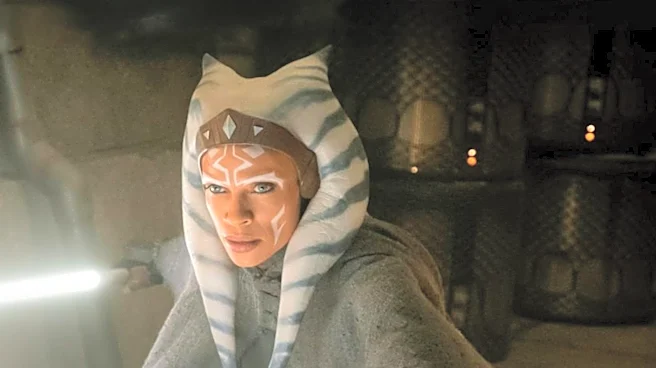
Lucasfilm is expected to continue pursuing both theatrical films and streaming series for the Star Wars franchise, balancing the need for blockbuster events with opportunities for deeper storytelling. Upcoming projects like 'Star Wars: Starfighter' are set to bolster the theatrical slate, while the ongoing development of series like 'Ahsoka' Season 2 demonstrates a continued commitment to television. The company will likely focus on optimizing production costs and ensuring that streaming content consistently meets audience expectations to justify investments. Kennedy's insights also touched upon the potential integration of AI tools in pre-production and the broader implications of industry consolidation on film output, suggesting that Lucasfilm will be navigating technological advancements and market dynamics in its future content creation. The success of this dual strategy will be crucial for maintaining the franchise's relevance and profitability in a rapidly evolving entertainment landscape.
Beyond the Headlines
Kennedy's discussion extends beyond mere production strategy, touching upon the fundamental nature of storytelling in the modern era. Her emphasis on serialized narratives harks back to the origins of popular fiction and highlights how streaming platforms have revitalized this form for contemporary audiences. The challenge for Lucasfilm, and indeed for many major studios, lies in finding the optimal balance between the immediate, high-impact experience of a film and the sustained, immersive engagement offered by a series. This balancing act is not just about revenue but also about preserving the creative integrity and expansive potential of a beloved universe. Furthermore, Kennedy's engagement with AI's role in filmmaking suggests a forward-looking approach to production, acknowledging both the opportunities for efficiency and the potential impact on creative jobs, reflecting a broader industry conversation about technology's influence on artistic endeavors.