


What's Happening?
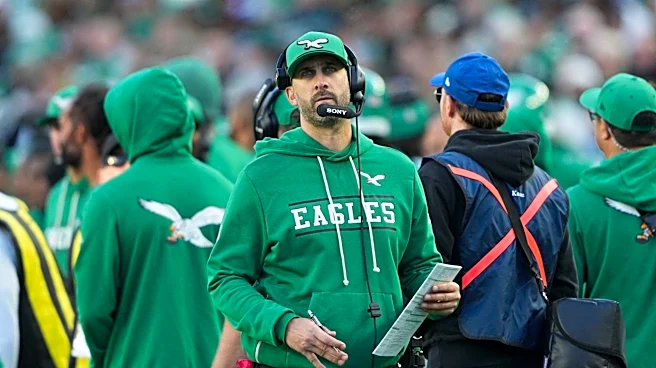
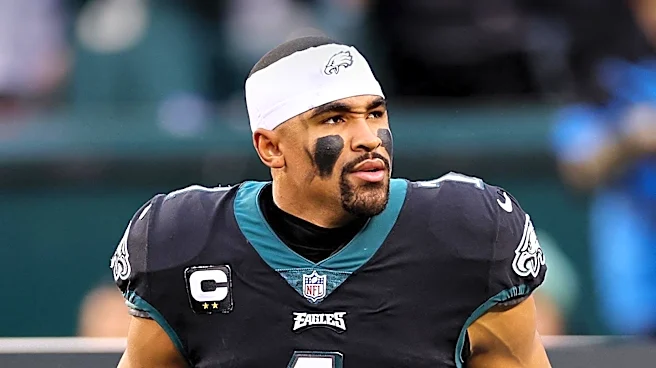
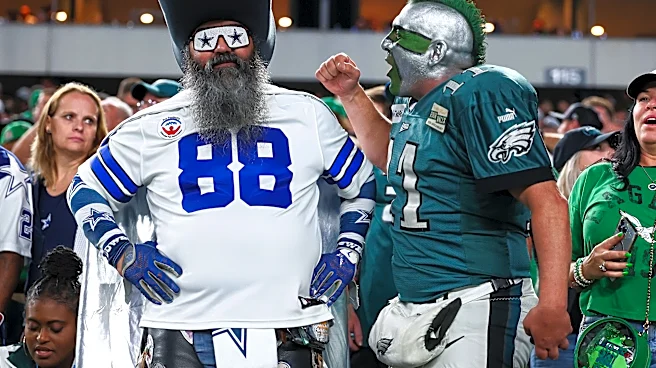
Jeffrey Lurie, owner of the Philadelphia Eagles, is facing a debate over the team's jersey color, with former Eagles center Jason Kelce advocating for a return to the traditional Kelly Green. Lurie introduced Midnight Green as the team's primary jersey color in 1996,
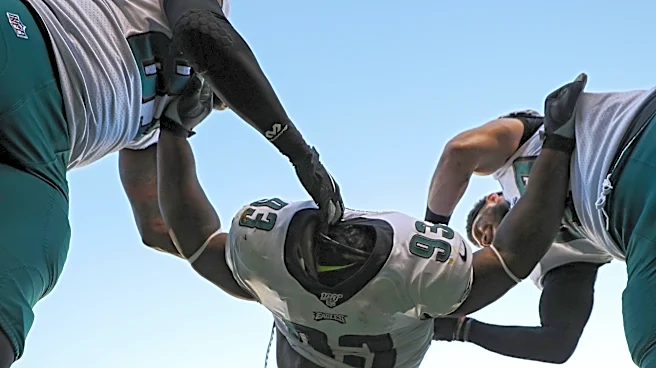
two years after purchasing the franchise. This change moved away from the Kelly Green uniforms that were in use from 1985 to 1995. Kelce expressed his preference for Kelly Green, stating that the current Midnight Green jerseys, particularly those made by Nike, lack the 'sheen and shininess' of the older Reebok-era uniforms. Despite the Eagles achieving significant success in Midnight Green, including three Super Bowl appearances, many fans, like Kelce, still favor the classic Kelly Green. The team reintroduced Kelly Green as an alternate uniform in 2023, acknowledging its popularity among supporters.
Why It's Important?
The discussion around the Philadelphia Eagles' jersey color, while seemingly minor, highlights the deep connection between sports franchises, their history, and their fan base. For Jeffrey Lurie and the Eagles organization, maintaining a strong brand identity is crucial for fan loyalty, merchandise sales, and overall team image. The preference for Kelly Green among a significant portion of the fan base, including a respected former player like Jason Kelce, indicates that tradition and nostalgia play a powerful role in sports culture. This debate can influence marketing strategies, uniform design decisions, and even the perception of the team's commitment to its heritage. The NFL's recent allowance for teams to wear alternate and throwback jerseys more frequently underscores the league's recognition of the commercial and emotional value of these historical designs, as they constitute a substantial portion of jersey sales.
What's Next?
While Jeffrey Lurie has acknowledged the popularity of both Kelly Green and Midnight Green, stating that the team loves 'anything we can win big in,' a full-time return to Kelly Green does not appear imminent. The Eagles currently utilize Kelly Green as an alternate uniform, a practice that the NFL has made more flexible, allowing teams to wear such uniforms up to four times a season. The continued advocacy from figures like Jason Kelce and the sustained fan demand for the classic color may keep the conversation alive. Future decisions regarding the team's primary uniform color will likely weigh fan sentiment, historical significance, and commercial considerations. The ongoing popularity of throwback jerseys across the NFL suggests that teams will continue to explore ways to incorporate their heritage into their branding, potentially leading to more frequent use or a permanent shift back to traditional colors in the long term.
Beyond the Headlines
The debate over the Eagles' jersey color extends beyond mere aesthetics, touching upon themes of identity, legacy, and the commercialization of sports. For fans, a team's colors are often a symbol of continuity and shared history, evoking memories of past glories and connecting generations of supporters. The shift from Kelly Green to Midnight Green under Jeffrey Lurie represented a modernization effort, but it also created a divide among fans who value tradition. This dynamic is common across many sports leagues, where teams balance innovation with the preservation of their historical identity. The commercial success of throwback jerseys demonstrates that there is significant market value in nostalgia, prompting leagues and teams to leverage their past to engage fans and drive revenue. Ultimately, the jersey color debate reflects the complex interplay between a team's ownership, its history, its fan base, and the broader commercial landscape of professional sports.