







What's Happening?
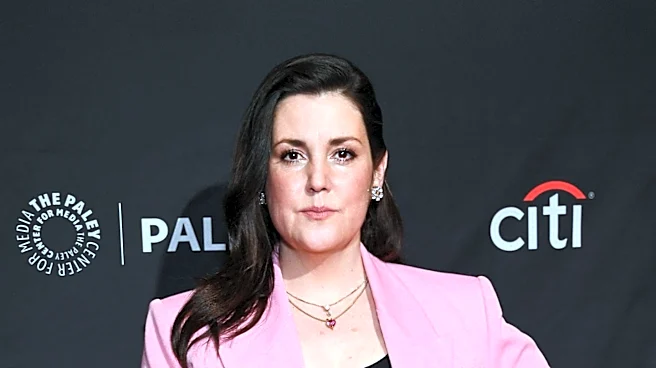
Actress Melanie Lynskey has publicly refuted online claims that she earned between $200,000 and $300,000 per episode for her role as Rose in the CBS series 'Two and a Half Men'. Lynskey clarified that these figures were significantly inflated, stating
that her actual earnings were approximately one-tenth of the rumored amount. She explained that her highest per-episode salary on the show was around $43,000 during the final season, having started at $20,000 per episode with a 5% increase each season. Lynskey emphasized that after deductions for agents, managers, and taxes, actors typically take home about 50% of their gross pay. She also noted that she appeared in only 63 of the show's 262 episodes, primarily in the first two seasons, further challenging the idea that she amassed millions from the series.
Why It's Important?
Lynskey's detailed account provides crucial insight into the often-misunderstood financial realities of working in the television industry. Her clarification directly addresses the gap between reported gross salaries and actual take-home pay, a common issue across various high-profile professions. This transparency is important for managing public expectations and fostering a more accurate understanding of how compensation works in Hollywood. It also highlights the significant financial cuts actors face from their representatives and taxes, which can drastically reduce their net income. The discussion also brings to light the varying pay scales within a single production, with lead actors like Charlie Sheen earning substantially more than supporting cast members, even those with significant roles.
What's Next?
The ongoing conversation sparked by Melanie Lynskey and Holland Taylor regarding salary disparities and actual earnings in 'Two and a Half Men' may encourage more actors to speak out about their financial experiences. This increased transparency could lead to a more informed public and potentially influence future industry practices regarding contract negotiations and compensation structures. While immediate systemic changes are unlikely, the cumulative effect of such public discussions can contribute to a broader movement for fairer and more transparent pay practices across the entertainment sector. It also serves as a reminder for media outlets to provide comprehensive context when reporting on celebrity incomes.
Beyond the Headlines
Melanie Lynskey's statement goes beyond a simple salary correction; it underscores the broader economic challenges faced by many actors, even those on successful shows. Her gratitude for the income, which allowed her to pay a mortgage and pursue independent films, illustrates that even what appears to be a substantial salary can be a means to financial stability rather than immense wealth. This perspective challenges the glamorous image often associated with Hollywood and reveals the practical, often modest, financial goals of many working actors. It also implicitly critiques the hierarchical pay structures within the industry, where a few top-tier stars command exorbitant fees while others, even with significant contributions, earn considerably less, highlighting issues of equity and value recognition.