



What's Happening?
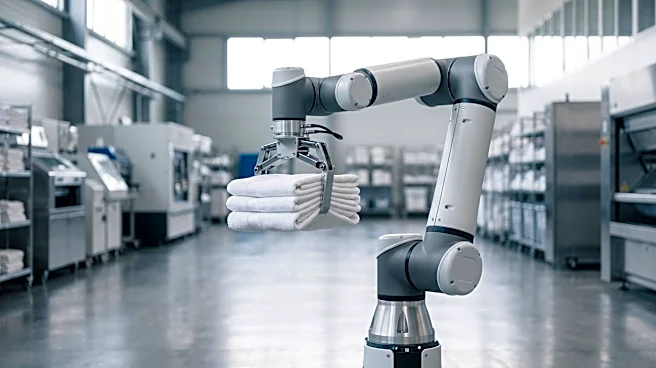
French physical AI startup Gobano Robotics has reported a 99.5 percent task success rate for its autonomous robotic system at Henri Wartner Group, a French industrial laundry company. The Gobano Station robot is designed to handle repetitive towel folding
and inspection tasks, operating autonomously for several hours. According to Gobano, the system achieves 68 percent of a human worker’s throughput over an 18-hour shift, with reinforcement learning contributing to productivity improvements. The robot is engineered to manage variations in towel positioning, fabric folds, and gripping conditions without constant operator supervision. If a grasp fails or a towel is misplaced, the system automatically checks the outcome and can restart the workflow. This recovery capability is crucial for maintaining production without frequent human intervention. Employees are still responsible for replenishing materials, maintenance, and resolving exceptions that the robot cannot handle.
Why It's Important?
This achievement by Gobano Robotics signifies a significant advancement in industrial automation, particularly for tasks involving flexible materials like textiles. The high success rate of 99.5% demonstrates the growing reliability and capability of autonomous robotic systems in real-world industrial settings. For industries like laundry services, which often involve repetitive and labor-intensive tasks, this technology offers the potential for increased efficiency, reduced operational costs, and improved consistency. The ability of the robot to self-correct and restart workflows minimizes downtime and the need for constant human oversight, allowing human workers to focus on more complex or value-added tasks. This development could pave the way for broader adoption of AI-powered robotics in various manufacturing and service sectors, addressing labor shortages and enhancing productivity across different industries. The focus on reliability before speed also highlights a practical approach to integrating advanced robotics into existing operations.
What's Next?
Gobano Robotics plans to further extend the operating periods of its autonomous laundry robot, increase its throughput, and develop capabilities for handling additional materials and workflows. The company also aims to transfer learning from existing installations to future robotic systems, which will reduce the time required to establish reliable autonomous operations in new deployments. This continuous improvement strategy suggests that the capabilities of such robots will evolve, potentially leading to even higher efficiency and broader applicability. As the technology matures, Gobano may explore expanding its solutions to other industrial sectors that deal with similar challenges of handling flexible materials. The success at Henri Wartner Group serves as a commercial application benchmark, which could attract more industrial partners looking to automate their repetitive tasks and improve operational efficiency.
Beyond the Headlines
The deployment of autonomous robots like Gobano's in industrial settings raises several deeper implications. Ethically, it prompts discussions about the future of work and the potential impact on human employment, as robots take over repetitive tasks. However, it also highlights the creation of new roles in robot maintenance, programming, and supervision. Legally, the increasing autonomy of these systems may necessitate new regulations concerning liability in case of malfunctions or accidents. Culturally, the integration of robots into daily industrial operations could shift perceptions of human-robot collaboration and the nature of labor. This technology also underscores the importance of reinforcement learning and AI in enabling robots to adapt and improve their performance over time, moving beyond pre-programmed actions. The ability to handle flexible materials, traditionally a challenge for robotics, signifies a major breakthrough that could unlock automation in many previously untouched sectors, leading to a long-term shift in industrial production paradigms.