




What's Happening?
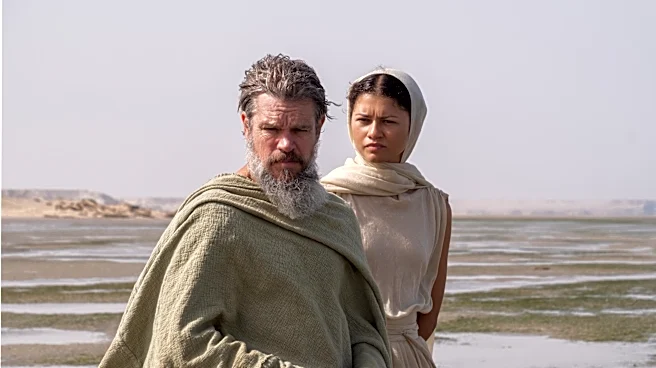
Christopher Nolan's film 'The Odyssey' has surpassed $1 billion in global ticket sales, marking a significant achievement for the director. The film, featuring an ensemble cast including Matt Damon, Anne Hathaway, and Zendaya, is notable for being the first
narrative feature shot entirely with Imax cameras. Two new books, 'Filming the Odyssey: Inside the Making of Christopher Nolan’s Modern Epic' and 'The World of the Odyssey,' provide insights into the film's production and narrative. The books explore the creative process, casting decisions, and technological advancements that contributed to the film's success. Nolan's adaptation of Homer's epic poem has been praised for its innovative use of Imax technology and its exploration of timeless themes.
Why It's Important?
The success of 'The Odyssey' underscores the potential of Imax technology in enhancing cinematic experiences, setting a new standard for large-scale filmmaking. Nolan's achievement demonstrates the viability of ambitious projects that combine traditional storytelling with cutting-edge technology. The film's box office performance highlights the audience's appetite for epic narratives and visually immersive experiences. This success could encourage other filmmakers to explore similar technological innovations, potentially transforming the film industry. Additionally, the film's exploration of classic themes through a modern lens may inspire renewed interest in adapting literary works for contemporary audiences.
What's Next?
Following the success of 'The Odyssey,' there may be increased interest in producing films that utilize Imax technology to create immersive experiences. The film's achievement could lead to more collaborations between filmmakers and technology companies to push the boundaries of visual storytelling. As audiences continue to seek out unique cinematic experiences, studios might prioritize projects that offer both narrative depth and technological innovation. The release of the accompanying books could also spark further interest in the film's production process, potentially influencing future educational and industry discussions on filmmaking techniques.