







What's Happening?
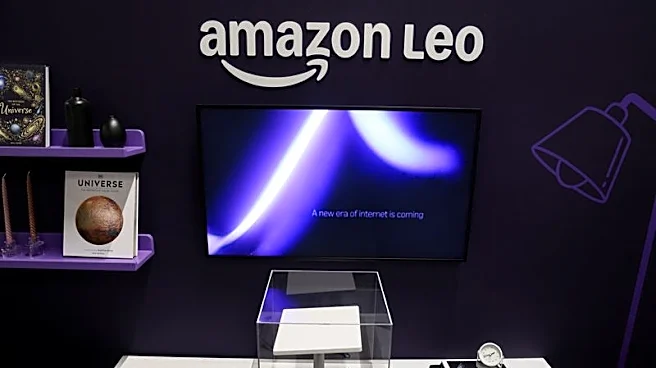
Amazon's Leo subsidiary has filed an application with the Federal Communications Commission (FCC) to launch a 'direct-to-device' telecom service. This service will consist of over 5,100 low Earth orbit satellites aimed at providing high-speed, low-latency
broadband to areas lacking connectivity. The initiative is part of Amazon's broader strategy to bridge the digital divide by offering services to consumer, enterprise, and government customers worldwide. The network, if approved, is expected to launch in early 2028. This move follows Amazon's acquisition of Globalstar, a mobile satellite services provider, for $11.6 billion, and partnerships with telecom operators like DirecTV, HeroTel, and Vodafone.
Why It's Important?
The proposed satellite network by Amazon's Leo subsidiary represents a significant step in addressing global connectivity issues, particularly in remote and underserved areas. By providing high-speed internet access, Amazon aims to enhance communication capabilities for various sectors, including disaster response, global fleet management, and IoT connectivity. This initiative could potentially disrupt existing telecom markets by offering an alternative to traditional ground-based networks. The project also highlights the growing competition in the satellite internet space, with companies like SpaceX's Starlink already making strides in this area. The success of this venture could lead to increased internet accessibility, fostering economic growth and innovation in regions previously hindered by connectivity challenges.
What's Next?
Pending FCC approval, Amazon's Leo subsidiary plans to launch the satellite network in early 2028. The company will likely continue to strengthen its partnerships with telecom operators and refine its technology to ensure seamless integration with existing communication infrastructures. The FCC's decision will be crucial, as it will determine the project's feasibility and timeline. Additionally, the initiative may prompt responses from competitors and regulatory bodies, potentially influencing future policies and market dynamics in the satellite internet industry.