









What's Happening?
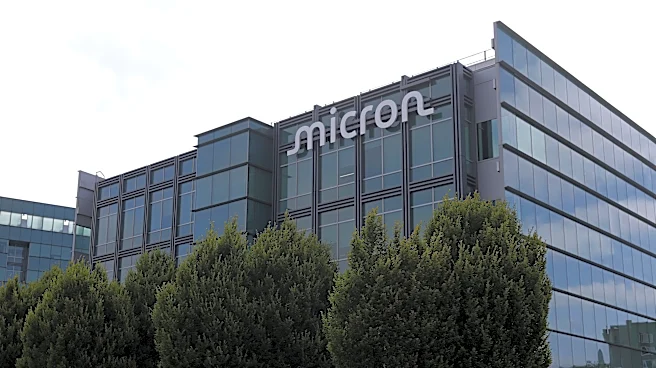
Micron Technology has reported a significant increase in revenue and profit for its third fiscal quarter ending May 28, 2026. The company achieved a net profit of $28.24 billion, with total revenue reaching $41.46 billion. This growth is largely driven
by the demand for DRAM and NAND memory products, which contributed $31.3 billion and $9.9 billion respectively. The company's gross profit margin has reached a record 84.9%, surpassing other tech giants like NVIDIA and Meta. Micron has also secured long-term agreements with major customers, locking in a minimum contract revenue of about $100 billion. These agreements are expected to cover more than half of Micron's revenue in the future.
Why It's Important?
Micron's financial performance highlights the growing importance of memory products in the tech industry, particularly with the rise of AI applications. The company's ability to secure long-term contracts and deposits indicates a shift from the traditional cyclical nature of the memory industry to a more stable and strategic infrastructure role. This transformation could lead to sustained profitability and market leadership for Micron. The increased demand for memory products is also impacting other sectors, such as smartphones, where rising costs are affecting pricing and sales forecasts.
What's Next?
Micron anticipates further growth in the next quarter, projecting revenue around $50 billion and a gross profit margin of 86%. The company is focusing on expanding its strategic customer agreements, which could further stabilize its revenue streams. The broader tech industry may continue to experience shifts in supply and demand dynamics, particularly in memory products, as AI and high-performance computing applications grow. This could lead to further price adjustments and strategic realignments across related sectors.
Beyond the Headlines
The shift in the memory industry from a cyclical to a more stable model could have long-term implications for global tech supply chains. As memory becomes a critical component in AI and computing, companies like Micron may gain increased influence over tech innovation and pricing strategies. This could also lead to increased competition and investment in memory technology development, potentially reshaping the landscape of the tech industry.