





What's Happening?
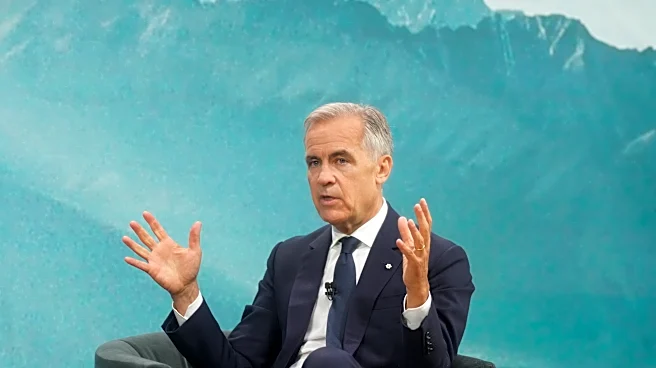
OpenAI is actively exploring partnerships for data centers in Canada, driven by the country's abundant energy resources and available land. George Osborne, OpenAI's head of countries, conveyed this interest during Mark Carney's investment summit in Toronto.
This move follows OpenAI's decision in April to pause its British data center project, citing regulatory hurdles and high energy costs as primary reasons. Osborne highlighted that British industrial electricity costs are approximately four times higher than in countries like the United States, Finland, Norway, and Sweden. He also praised Canada's 'clearer plans for AI adoption' and the prime minister's 'very impressive' medium and long-term AI strategy. While pausing its UK expansion, OpenAI has established a data center in Norway, which utilizes Narvik hydropower to power its operations, targeting 100,000 Nvidia GPUs by the end of the year.
Why It's Important?
This development is significant for the U.S. technology sector and its global operations, as it illustrates the critical role of energy and infrastructure in the expansion of AI capabilities. OpenAI's decision to prioritize Canada for data center development, while pausing projects in the UK, underscores the economic and logistical challenges faced by AI companies in securing the vast resources required for their operations. The high energy consumption of AI data centers makes access to affordable and reliable power a key determinant in investment decisions. This could lead to a geographical shift in AI infrastructure development, favoring regions with competitive energy markets and available land. For the U.S., this could mean increased competition for resources or a re-evaluation of its own energy infrastructure to remain attractive for AI investment. The emphasis on Canada's clear AI adoption plans also highlights the importance of supportive governmental policies and regulatory environments in attracting major tech investments, influencing how other nations, including the U.S., might approach AI strategy and infrastructure development.
What's Next?
OpenAI is expected to continue its discussions and negotiations for data center partnerships in Canada, potentially leading to significant investments in the country's infrastructure. This could involve collaborations with Canadian energy providers and real estate developers. The company's focus on energy and land availability suggests that future AI infrastructure decisions will heavily weigh these factors, potentially influencing investment patterns in other regions. Other countries, including the UK and those in Europe, may need to reassess their energy policies and regulatory frameworks to attract or retain AI development projects. The EU's initiative to solicit bids for gigafactories, aiming for over EUR 20 billion in private investment across multiple sites, indicates a broader recognition of the need for substantial infrastructure to support AI growth. This competitive landscape will likely drive further innovation in energy efficiency and sustainable data center solutions globally.
Beyond the Headlines
The strategic decisions made by companies like OpenAI regarding data center locations have broader implications for global energy consumption and environmental sustainability. The immense power requirements of AI, as evidenced by the need for 100,000 Nvidia GPUs in Norway, raise concerns about the carbon footprint of the rapidly expanding AI industry. OpenAI's preference for regions with abundant and potentially renewable energy sources, such as Norway's hydropower, suggests a growing awareness of environmental impact. This could drive a shift towards more sustainable energy solutions for data centers worldwide. Furthermore, the concentration of AI infrastructure in specific regions could lead to new geopolitical dynamics, with countries possessing favorable energy and land resources gaining strategic importance in the global AI landscape. The ethical dimension also comes into play, as the environmental cost of AI development must be balanced against its potential benefits and the imperative for responsible technological advancement.