



What's Happening?
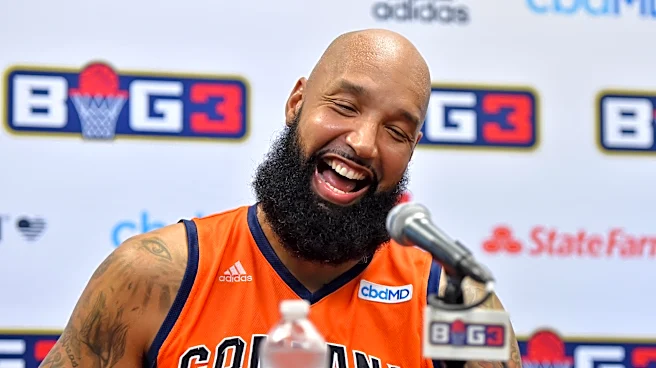
The BIG3 Basketball League, founded by Ice Cube, is making significant strides as it enters its ninth season. The league, known for its half-court, 3-on-3 format, has announced a merger with Graf Global Corporation. This strategic move is part of the
league's plan to become the first traditional professional U.S.-based sports league to go public, with a pre-money valuation of $290 million. The league features eight teams with rosters that include notable former NBA players such as Dwight Howard, Greg Monroe, and Lance Stephenson. The current season is underway, with games scheduled at the Amerant Bank Arena in Sunrise, Florida. The league's unique format and star-studded lineups continue to draw attention as it seeks to expand its reach and financial stability through this merger and public offering.
Why It's Important?
The merger and public offering plans of the BIG3 Basketball League represent a significant development in the sports industry, particularly for non-traditional sports formats. By going public, the league aims to secure additional funding and increase its visibility, potentially attracting more fans and sponsors. This move could set a precedent for other niche sports leagues looking to expand their financial and operational capabilities. The involvement of high-profile former NBA players adds credibility and appeal, which could enhance the league's marketability. The success of this venture could influence how other sports leagues approach growth and financial strategies, especially those that operate outside the mainstream sports ecosystem.
What's Next?
As the BIG3 Basketball League progresses with its merger and public offering, stakeholders will be closely monitoring the league's performance both on and off the court. The league's ability to attract investors and maintain fan interest will be crucial in determining the success of its public offering. Additionally, the league will need to navigate the challenges of operating as a publicly traded entity, including meeting financial reporting requirements and managing shareholder expectations. The outcome of this initiative could impact future decisions regarding league expansions, player acquisitions, and marketing strategies.