




What's Happening?
SAP Extended Warehouse Management (SAP EWM) is an advanced software solution designed to manage complex warehouse and distribution operations. It provides detailed, real-time control over every aspect of warehouse activity, from the precise location of each
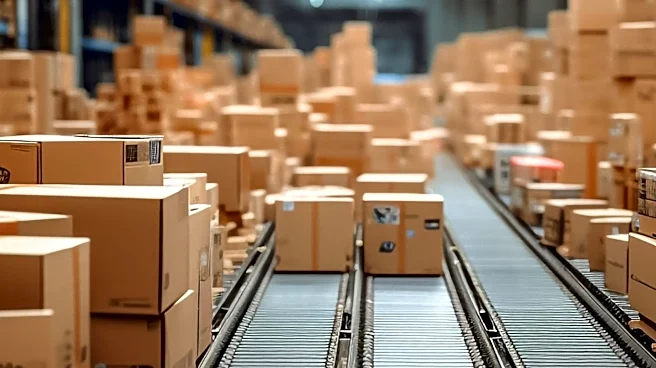
product unit to task scheduling for personnel and machinery. Unlike older systems that offer general stock counts, SAP EWM tracks specific unit movements, identifies who moved them, monitors pending tasks, and manages dock door usage. This system integrates with a company's existing enterprise backbone for finance, procurement, and sales, taking over the minute-by-minute operational control within the warehouse. It supports various functions including inbound delivery, goods receipt, putaway strategies, inventory control, order picking, packing, staging, and loading. SAP EWM is available in two main deployment styles: embedded within SAP S/4HANA or as a decentralized system, with core concepts remaining consistent across both models. The increasing demands of e-commerce and global manufacturing have elevated the importance of efficient warehouse technology, creating a steady demand for specialists proficient in systems like SAP EWM.
Why It's Important?
The widespread adoption of SAP EWM signifies a critical shift in how U.S. businesses manage their supply chains and logistics. With consumer expectations for rapid delivery (next-day or same-day) intensifying, efficient warehouse operations are no longer just a cost center but a competitive differentiator. Companies across various sectors, including retail, pharmaceuticals, automotive, food and beverage, and logistics, rely on advanced systems like EWM to meet these demands. The detailed traceability offered by SAP EWM, particularly for industries like pharmaceuticals and food, is not merely an operational advantage but a legal and regulatory necessity, ensuring compliance and product safety. The demand for skilled SAP EWM professionals is growing, creating specialized career opportunities that bridge technology and logistics. This trend impacts the U.S. job market by requiring a workforce with specialized technical and logistical expertise, influencing educational and training programs to meet this industry need.
What's Next?
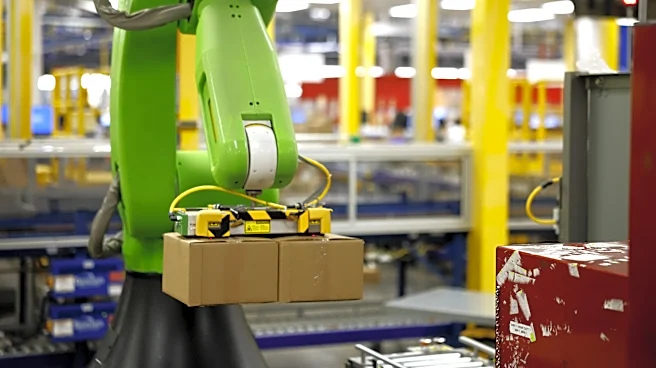
The evolution of warehouse technology, driven by solutions like SAP EWM, is expected to continue integrating more advanced features such as artificial intelligence and automation. As businesses strive for greater efficiency and accuracy, the demand for real-time data and predictive analytics in warehousing will grow. Future developments in SAP EWM will likely focus on enhancing its capabilities in areas like yard management, labor management, and slotting optimization, further streamlining warehouse processes. The trend towards embedded EWM in SAP S/4HANA suggests a move towards more unified and integrated business systems, reducing data silos and improving overall operational visibility. Companies will continue to invest in training and upskilling their workforce to manage these sophisticated systems, ensuring a pipeline of talent capable of configuring, supporting, and optimizing advanced warehouse management solutions. The ongoing digital transformation in logistics will also push for seamless integration with other modules like transportation management and production planning.
Beyond the Headlines
The shift towards sophisticated warehouse management systems like SAP EWM has broader implications beyond operational efficiency. It highlights a fundamental change in the nature of logistics work, moving from manual, labor-intensive tasks to technology-driven roles requiring analytical and system management skills. This transformation raises questions about workforce adaptation, the need for continuous learning, and the potential for job displacement in traditional warehouse roles, while simultaneously creating new, higher-skilled positions. Ethically, the enhanced traceability and control offered by EWM can improve product safety and accountability, particularly in sensitive industries. Legally, the detailed record-keeping capabilities can aid in compliance and dispute resolution. Culturally, it fosters a data-driven decision-making environment within organizations, emphasizing precision and real-time insights. The long-term impact could include more resilient supply chains, reduced waste, and a more responsive global trade ecosystem, fundamentally reshaping how goods move from production to consumption.