






What's Happening?
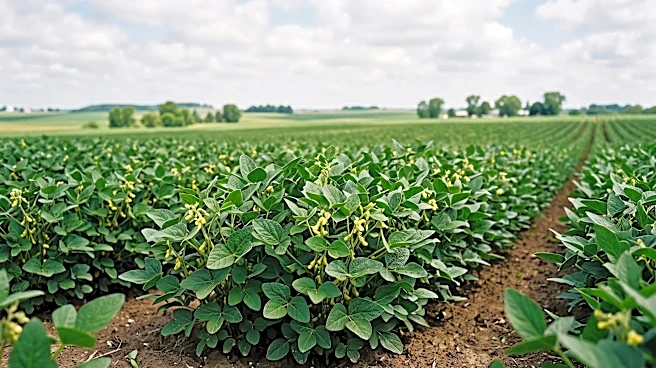
Iowa farmers are navigating a challenging agricultural landscape marked by economic pressures and significant disease outbreaks, including tar spot and gray leaf spot. According to Dan Bjorklund, Technical Agronomy Lead from Landus Cooperative, and Amy
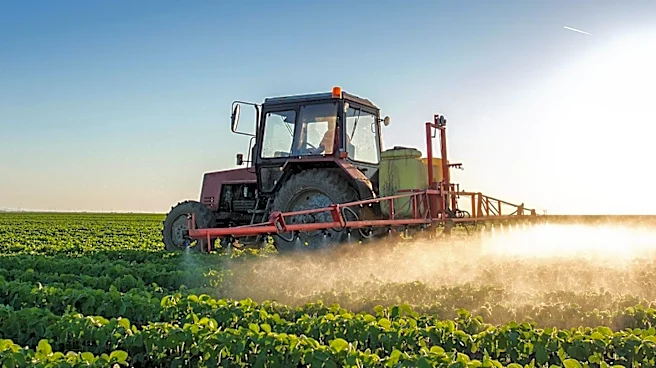
Asmus, Co-Owner of Asmus Farm Supply, many growers opted against additional fungicide applications this year to save money due to market conditions. This decision coincided with severe disease pressures, leading to notable yield reductions in some fields. Bjorklund cited instances where corn yields dropped from 252-260 bushels per acre last year (with fungicide protection) to around 200 bushels this year. The use of drone technology, specifically NDVI images, helped identify affected areas, showing 'ghosted out' plants with small red spots indicative of disease. The discussion also touched upon newer fungicide products that work systemically, unlike traditional leaf-based applications, and the potential benefits of early V5 timing for fungicide application in delaying disease onset.
Why It's Important?
The economic decisions made by Iowa farmers regarding fungicide applications have significant implications for agricultural output and profitability. The trade-off between cost savings and disease management directly impacts corn yields, which can affect local and national agricultural markets. Reduced yields due to preventable diseases like tar spot and gray leaf spot can lead to financial strain for individual farmers and potentially influence commodity prices. The reliance on advanced technologies like drones for early disease detection highlights a growing trend in precision agriculture, which is crucial for optimizing resource allocation and mitigating losses. Furthermore, the discussion about new systemic fungicides and optimal application timings underscores the continuous evolution of agricultural practices and the importance of research and development in crop protection.
What's Next?
Looking ahead, agricultural experts are focusing on strategies to improve crop health and yield for the upcoming seasons. Dan Bjorklund emphasized the importance of hybrid selection and the use of products that can help plants withstand biotic and abiotic stresses. There is also a strong focus on re-evaluating nitrogen application timing and rates, especially given concerns about water quality and the 50-degree rule for fall anhydrous application. Farmers and agronomists will be reviewing data from the past growing season, utilizing tools like SkyScout for retrospective analysis, to inform future decisions. Farmer meetings scheduled for December will serve as a platform to discuss these findings and plan for more sustainable and effective agricultural practices, including ensuring replacement fertilizer applications for phosphorus and potassium.
Beyond the Headlines
The challenges faced by Iowa farmers extend beyond immediate yield losses, touching upon broader issues of environmental sustainability and the long-term economic viability of agriculture. The debate around nitrogen application, particularly the '50-degree rule' and the use of stabilizers, highlights the tension between maximizing crop yield and minimizing environmental impact, such as water quality concerns. The adoption of advanced technologies like drones and AI-driven analytics in agriculture signifies a shift towards data-informed decision-making, which could revolutionize farming practices. This technological integration, coupled with ongoing research into new crop protection products, suggests a future where farming is more precise, efficient, and environmentally conscious, but also requires significant investment and adaptation from growers.