





What's Happening?
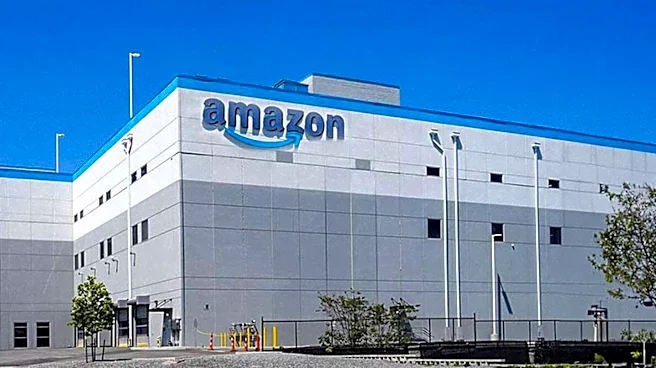
Amazon is significantly expanding its robotics manufacturing capabilities in the United States with an investment exceeding $100 million. This capital will fund the construction of a new 585,000-square-foot robotics plant in Greenwood, Indiana, which
is projected to open by 2028. This new facility, alongside an existing one in Texas, is set to double Amazon's robot-making capacity. The expansion is expected to create 300 manufacturing and engineering jobs, with average annual salaries approaching $100,000. Amazon states that it has already produced over one million robots, which currently support approximately 75% of its customer orders across more than 300 facilities worldwide. This move underscores Amazon's continued commitment to integrating robotics into its operational infrastructure.
Why It's Important?
This substantial investment by Amazon in U.S. robot manufacturing carries significant implications for the American economy and workforce. The creation of 300 high-paying manufacturing and engineering jobs, averaging nearly $100,000 annually, will provide economic opportunities and contribute to the growth of the skilled labor force in the robotics sector. Doubling Amazon's robot-making capacity within the U.S. could lead to increased domestic production, potentially reducing reliance on international supply chains for its robotic needs. This expansion also signals a broader trend of automation in logistics and e-commerce, which could influence other industries to adopt similar technologies to enhance efficiency and meet growing consumer demands. While creating new jobs in manufacturing, the increased deployment of robots could also reshape the nature of work in Amazon's fulfillment centers, potentially leading to shifts in labor requirements and job roles for human employees.
What's Next?
The new robotics plant in Greenwood, Indiana, is slated to become operational by 2028. In the interim, Amazon will likely focus on the construction and outfitting of the facility, as well as the recruitment and training of the 300 new manufacturing and engineering employees. This expansion is expected to further integrate robotics into Amazon's global operations, potentially leading to even greater efficiency in order fulfillment and delivery. Other companies in the logistics and retail sectors may observe Amazon's increased automation efforts and consider similar investments to remain competitive. The long-term impact will involve monitoring the balance between job creation in robotics manufacturing and any potential changes to the existing workforce in Amazon's warehouses as automation becomes more prevalent.
Beyond the Headlines
Amazon's significant investment in U.S. robotics manufacturing highlights a deeper societal and economic shift towards automation. Beyond the immediate job creation, this move raises questions about the future of labor in an increasingly automated world. It underscores the growing demand for specialized skills in robotics engineering and manufacturing, potentially influencing educational and vocational training programs to meet these evolving industry needs. The ethical implications of widespread automation, including job displacement concerns and the need for workforce retraining initiatives, will likely become more prominent as companies like Amazon continue to scale their robotic operations. This trend could also accelerate the development of more sophisticated and autonomous robotic systems, pushing the boundaries of what machines can achieve in industrial and commercial settings.