







What's Happening?
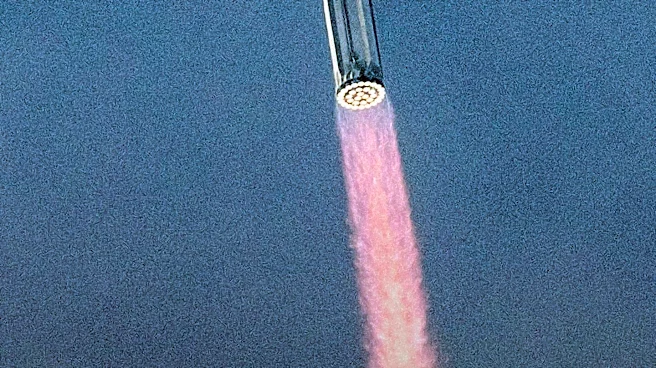
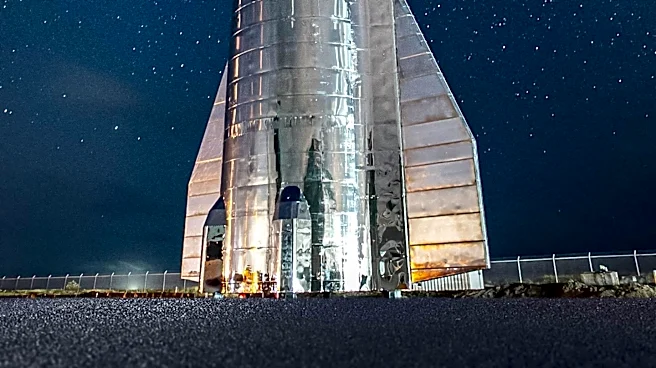
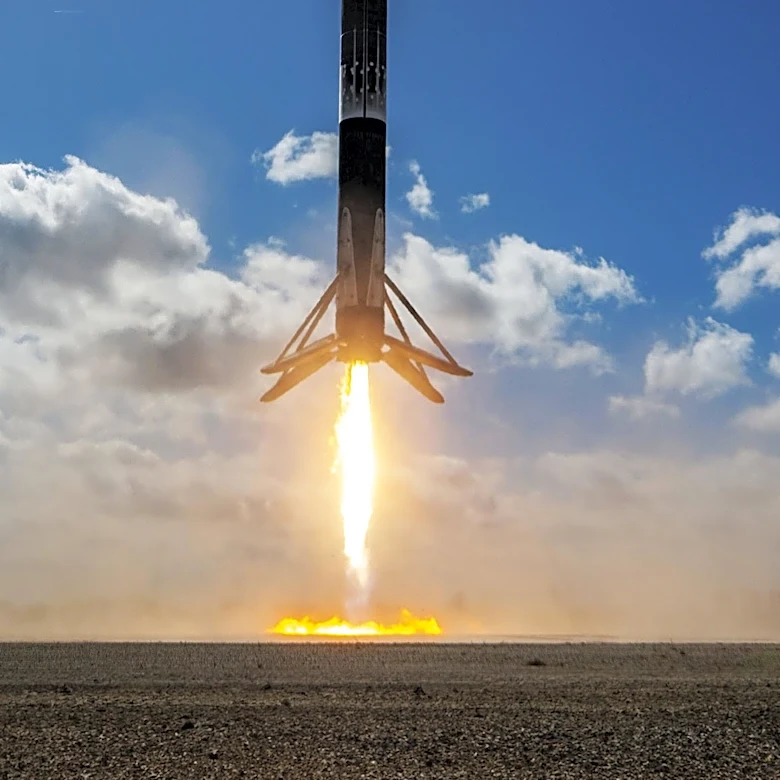
Space Exploration Technologies Corp (SpaceX) announced on November 6, 2026, its intention to launch Starship Flight 15 on November 13. This mission marks a significant milestone as SpaceX plans to attempt capturing the Starship spacecraft using its launch tower
for the first time. This innovative recovery method is central to SpaceX's ongoing efforts to develop fully reusable rocket technology. The company, founded by Elon Musk in 2002, operates in the Aerospace & Defense sector, designing and operating partially reusable rockets like Falcon 9 and Falcon Heavy, and the Dragon spacecraft. SpaceX's Starship program is dedicated to creating a fully reusable super-heavy launch system, aiming to reduce the cost and increase the frequency of space travel. The company also operates Starlink, the world's largest satellite broadband constellation, and holds a dominant position in the global commercial launch market.
Why It's Important?
The success of Starship Flight 15 and its novel recovery method could significantly impact the aerospace industry. Capturing the spacecraft with the launch tower would drastically reduce turnaround times between flights and lower operational costs, enhancing SpaceX's competitive advantage. This advancement is crucial for making space travel more accessible and affordable, potentially opening new avenues for space tourism, satellite deployment, and deep-space missions. For the U.S., this innovation reinforces its leadership in commercial spaceflight and technological advancement. It could also spur further investment and development in reusable rocket technology across the industry, fostering a more dynamic and competitive space economy. The implications extend to national security, as reliable and cost-effective access to space is vital for government and military applications.
What's Next?
Following the planned November 13 launch, the immediate focus will be on the success of the Starship Flight 15 mission and, particularly, the innovative launch tower capture attempt. A successful recovery would validate a key component of SpaceX's reusable spaceflight strategy, paving the way for more frequent Starship launches and further development of the system. If successful, SpaceX will likely proceed with subsequent Starship test flights, gradually expanding the operational envelope and capabilities of the spacecraft. The company will also continue to integrate Starship into its broader plans for lunar and Martian missions, as well as for deploying future generations of Starlink satellites. The outcome of this flight will be closely watched by competitors, investors, and space agencies worldwide, influencing future strategies and investments in space technology.
Beyond the Headlines
The pursuit of fully reusable spaceflight, epitomized by Starship and its advanced recovery methods, represents a paradigm shift in humanity's relationship with space. Beyond economic benefits, this technology could fundamentally alter the scale and ambition of space exploration, making large-scale colonization of other planets a more tangible reality. The ethical implications of such capabilities include discussions around space debris, the environmental impact of increased launch frequency, and the long-term governance of extraterrestrial resources. Culturally, the visual spectacle of a rocket being caught by its launch tower could inspire a new generation, much like the Apollo missions did, fostering renewed public interest in science, technology, engineering, and mathematics. This technological leap could also accelerate the development of related industries, such as advanced materials, robotics, and artificial intelligence, creating a ripple effect across the broader economy.