



What's Happening?
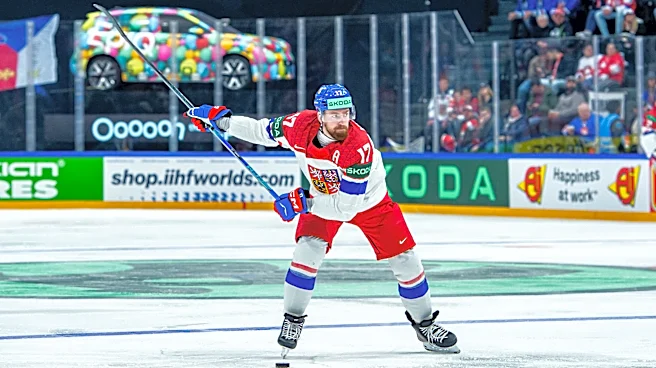
The International Ice Hockey Federation (IIHF) announced on November 7 that Belarus will remain excluded from the 2027 World Championship and World Junior Championship. This decision follows a ruling by the IIHF Disciplinary Board, which partially upheld
an appeal by the Belarusian Ice Hockey Association but found no legal grounds for immediate reinstatement. The IIHF cited existing tournament arrangements, including competition formats, schedules, ticketing, and logistics, as reasons for maintaining Belarus's exclusion. Separately, the IIHF stated its disagreement with an October 30 ruling by the Court of Arbitration for Sport (CAS) that overturned its exclusion of Russian teams from international competitions. The federation is currently reviewing the conditions necessary to implement the CAS ruling while ensuring tournament safety, financial stability, and the future of international ice hockey. Discussions with affected national federations, including Russia's, are being considered.
Why It's Important?
This decision by the IIHF has significant implications for international sports and geopolitical relations. The continued exclusion of Belarus, coupled with the contentious debate over Russia's potential return, highlights the ongoing impact of the conflict in Ukraine on global sporting events. For U.S. sports organizations and athletes, this situation creates uncertainty regarding future international competitions and potential boycotts. The CAS ruling on Russia's exclusion has drawn widespread criticism from several leading hockey nations, including Finland, Canada, Germany, and Czechia, with some European federations threatening to boycott the 2027 World Championship if Russian teams are reinstated. This division among nations could lead to a fragmented international ice hockey landscape, affecting sponsorships, media rights, and the overall integrity of the sport. The situation also underscores the challenge of separating sports from politics, as articulated by Ihor Merezhko, captain of Ukraine's national men's team.
What's Next?
The IIHF will continue to review the conditions for implementing the CAS ruling regarding Russian teams, which may involve further discussions with national federations. The potential return of Russia could lead to significant backlash, including boycotts from other nations, which would severely impact the 2027 World Championship. Ukraine, which qualified for the top division of the 2027 World Championship for the first time in 20 years, faces uncertainty about its place in the tournament if Russia is reinstated. The IIHF has not yet announced any decision to replace the Ukrainian team. The ongoing deliberations and potential reactions from various stakeholders will shape the future of international ice hockey competitions, with decisions expected to address the complex interplay of legal rulings, political pressures, and sporting integrity.
Beyond the Headlines
The IIHF's struggle to navigate the exclusion of Belarusian and Russian teams reveals deeper ethical and legal challenges facing international sports federations. The CAS ruling, which overturned Russia's exclusion, raises questions about the autonomy of sports bodies to impose sanctions based on geopolitical events. This situation highlights the tension between the principle of political neutrality in sports and the moral imperative to respond to international conflicts. The criticism from Ukraine and other nations, along with threats of boycotts, underscores a growing demand for sports organizations to take a stance on human rights and international law. This ongoing debate could set precedents for how international sports bodies handle similar geopolitical crises in the future, potentially leading to reforms in their governance structures and decision-making processes regarding participation eligibility.