









What's Happening?
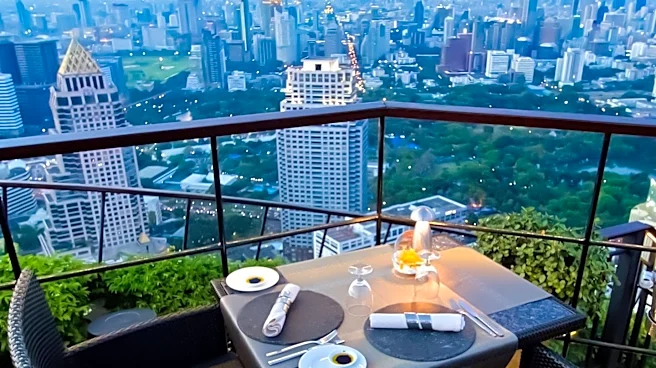
Rooftop bars, a popular summer destination, are often criticized for their poor service and high prices despite their appealing views. These bars, typically located in urban areas, attract crowds due to their unique positioning and the allure of scenic
vistas. However, patrons frequently encounter long lines, slow service, and overpriced drinks. The popularity of rooftop bars has been fueled by social media, where picturesque backdrops are highly valued. Despite these challenges, some bars, like Overstory in Manhattan, strive to offer a superior experience by focusing on quality cocktails and service. Overstory, which ranks on the World's 50 Best Bars list, emphasizes its interior space and cocktail program over its views, aiming to attract genuine cocktail enthusiasts rather than those seeking photo opportunities.
Why It's Important?
The criticism of rooftop bars highlights a broader issue in the hospitality industry where unique locations are often prioritized over service quality. This trend reflects a shift in consumer behavior driven by social media, where visual appeal can overshadow the actual experience. The willingness of patrons to tolerate subpar service for the sake of a good photo suggests a change in what is valued in a night out. For the industry, this presents both a challenge and an opportunity. Bars that can balance aesthetic appeal with quality service and drinks stand to gain a loyal customer base. Conversely, those that rely solely on their location may struggle to maintain long-term success as consumers become more discerning.
What's Next?
As the rooftop bar trend continues, establishments may need to reassess their business models to ensure sustainability. This could involve investing in staff training, improving service efficiency, and offering unique, high-quality beverages. Additionally, bars might consider implementing measures to manage crowd sizes and enhance the overall customer experience. For consumers, the growing awareness of these issues may lead to more selective patronage, with a focus on venues that offer both great views and excellent service. The industry could see a shift towards more thoughtful and intentional hospitality practices, potentially setting new standards for what constitutes a desirable night out.
Beyond the Headlines
The phenomenon of rooftop bars also raises questions about the impact of social media on consumer expectations and business practices. The emphasis on visual appeal over substance reflects a broader cultural trend where experiences are curated for online sharing rather than personal enjoyment. This has implications for how businesses market themselves and the types of experiences they prioritize. Additionally, the high prices and exclusivity associated with rooftop bars may contribute to a perception of elitism in the hospitality industry, potentially alienating certain demographics. Addressing these issues could lead to more inclusive and diverse offerings that cater to a wider audience.