


What's Happening?
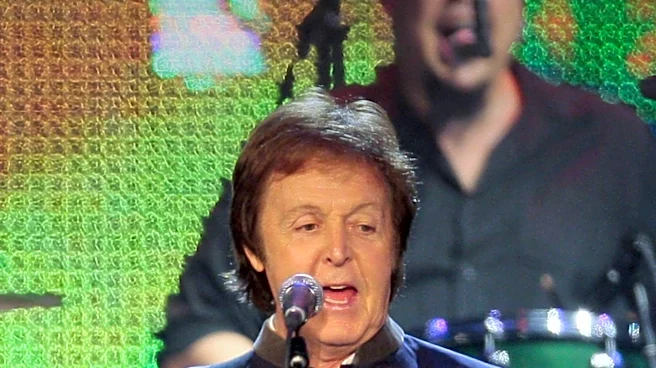
Paul McCartney has shared his perspective on John Lennon's iconic song 'Imagine,' acknowledging its magical quality and beautiful vision while simultaneously expressing doubt about its real-world feasibility. McCartney described 'Imagine' as 'one of John’s
great songs' and a 'beautiful vision of how the world could be,' noting its popularity and ability to unite people. He recalled envisioning Lennon writing the song and playing the piano part. However, McCartney admitted that upon hearing the song, a thought consistently arises in his mind: 'It’s not going to happen.' Despite this skepticism, he still regards the song as a 'beautiful dream' and a 'beautiful ambition,' recognizing its inherent beauty and the optimistic ideal it presents. Lennon's 'Imagine' is characterized as a deeply earnest ballad aiming to shape a reality where peace is possible, a thesis statement from Lennon that sought to unite the world through pure, unadulterated optimism.
Why It's Important?
McCartney's comments offer a nuanced insight into the legacy of one of the most significant songs in music history and the complex relationship between artistic idealism and practical reality. His perspective highlights a common tension between the aspirational messages of art and the often-harsh realities of the world. For fans of The Beatles and John Lennon, McCartney's candidness provides a deeper understanding of how even those closest to Lennon viewed his most profound artistic statements. It underscores that while art can inspire and unite, its ultimate impact on societal change is often debated. This discussion is important as 'Imagine' continues to be a global anthem for peace, and McCartney's view adds a layer of critical reflection to its enduring message, prompting listeners to consider the song's role as both a dream and a potential blueprint for a better world.
What's Next?
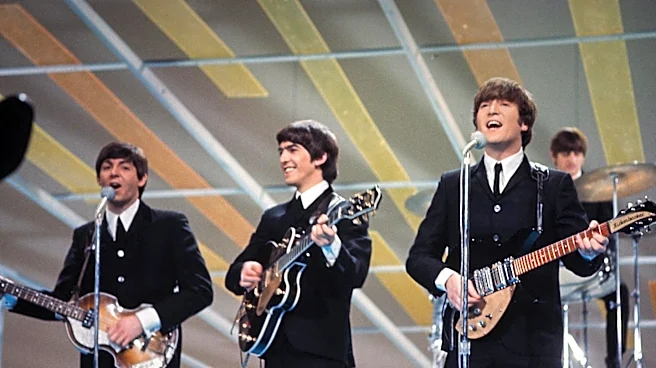
While McCartney's recent comments do not indicate any immediate actions or changes, they contribute to the ongoing discourse surrounding the legacy of John Lennon and The Beatles. The discussion around 'Imagine' and its message of peace will likely continue in music critiques, fan communities, and cultural analyses. McCartney's remarks may prompt further interviews or retrospectives from other musicians and cultural figures reflecting on the song's impact and feasibility. The song itself will undoubtedly remain a staple in global culture, continuing to be performed, analyzed, and debated in various contexts, from peace rallies to academic discussions. Future documentaries or biographical works on Lennon or McCartney might incorporate these sentiments, offering a more comprehensive view of their artistic and philosophical differences.
Beyond the Headlines
McCartney's reflection on 'Imagine' delves into the broader philosophical question of whether art's primary role is to inspire unattainable ideals or to propose actionable pathways for change. His acknowledgment of the song's beauty as a dream, coupled with his pragmatic assessment of its unlikelihood, touches upon the inherent tension between utopian visions and human nature. This perspective can spark discussions about the responsibility of artists in shaping societal expectations and the potential disillusionment that can arise when grand artistic visions clash with reality. It also subtly highlights the differing temperaments and worldviews within The Beatles, even years after their disbandment, showcasing how two creative giants could share a common artistic journey yet diverge on fundamental beliefs about humanity's capacity for peace. This ongoing dialogue enriches the cultural understanding of both artists and their enduring contributions.