




What's Happening?
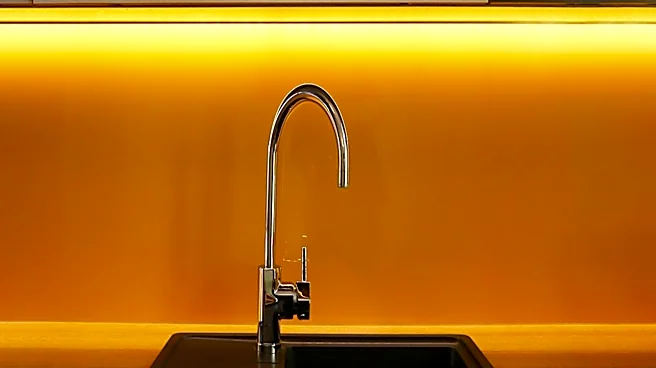
Brad Smith, a design expert, emphasizes that the wall behind a kitchen sink, especially one without a window, is crucial for the room's overall aesthetic. He argues that treating this area as 'dead space' can negatively impact the entire kitchen's feel.
Smith proposes a four-part framework for addressing windowless sink walls: deciding whether the wall should recede or stand out, respecting the sink's working zone, matching the solution to the room's light, and maintaining an honest sightline. He highlights that spatial decisions, light, reflection, material scale, and sightlines are more important than simple decorative accessories. Smith also advises against literal faux window treatments that can appear forced and suggests focusing on durability and functionality over fleeting trends.
Why It's Important?
Smith's insights are important for homeowners, interior designers, and the home improvement industry in the U.S. as they offer a structured approach to a common kitchen design challenge. By focusing on the wall behind the sink as a critical design element, Smith encourages a more thoughtful and integrated design process, potentially leading to more functional and aesthetically pleasing kitchen spaces. This perspective can influence product choices, material selections, and overall kitchen layouts, impacting manufacturers of tiles, mirrors, lighting fixtures, and cabinetry. For consumers, understanding these principles can help them make informed decisions, avoiding costly design mistakes and creating kitchens that feel considered rather than 'patched together.'
What's Next?
The principles outlined by Brad Smith are likely to influence contemporary kitchen design trends and practices. Designers may increasingly adopt his framework, leading to a shift in how windowless sink walls are approached in new constructions and renovations. Homeowners seeking to update their kitchens may look for design solutions that incorporate these ideas, driving demand for specific materials like full-height tile fields, large mirrors, or integrated lighting solutions. Educational content within the design community, including workshops and publications, may further disseminate these concepts, solidifying their place in modern kitchen aesthetics.
Beyond the Headlines
Beyond the immediate design implications, Smith's approach highlights a broader shift in interior design towards functionality and thoughtful integration over superficial decoration. His emphasis on durability, light, and spatial relationships reflects a growing consumer demand for practical yet beautiful living spaces. This perspective also touches upon the psychological impact of design, where a well-considered space can enhance daily living. The idea that a 'sink with no window just needs a clear plan for the wall behind it' underscores the importance of intentional design in even the most utilitarian areas of a home, suggesting a move away from purely decorative fixes towards holistic design solutions.