








What's Happening?
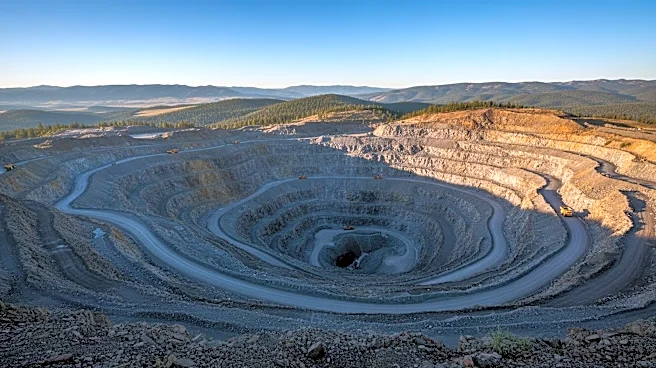
Perpetua Resources Corp., a development-stage company, is advancing its gold and antimony project in Idaho, which is increasingly seen as a strategic U.S. critical minerals asset. The project combines a large-scale gold deposit with one of the most significant
domestic antimony resources. This development comes at a time when China controls approximately 80% of the global antimony supply and has tightened export restrictions, elevating the project's national security importance. The project is supported by a preliminary $2.7 billion U.S. Export-Import Bank financing approval and approximately $700 million in cash, largely de-risking the venture. Key investors include John Paulson, Agnico Eagle, and JPMorgan, with Paulson holding a 25.9% stake. The Stibnite project contains 4.8 million ounces of gold reserves and 149 million pounds of antimony, with early production expected to average 463,000 ounces of gold annually.
Why It's Important?
The advancement of Perpetua Resources' project is significant due to its potential impact on U.S. national security and economic interests. As China dominates the global antimony supply, securing a domestic source is crucial for reducing dependency and enhancing strategic mineral security. The project's financial backing and institutional support underscore its viability and potential to contribute to the U.S. economy. Additionally, the project's success could bolster the U.S. position in the global minerals market, providing leverage against international supply chain disruptions. The anticipated production and financial returns also highlight the project's potential to generate substantial economic benefits, including job creation and increased tax revenues.
What's Next?
Perpetua Resources is moving forward with construction preparation and exploration across its 29,000-acre land package, aiming to extend the mine's life and enhance long-term cash flow. The project is on a development pathway toward production later in the decade, supported by policy backing and permitting progress. Stakeholders, including government entities and investors, will likely monitor the project's progress closely, given its strategic importance. The successful execution of this project could set a precedent for future U.S. mineral development initiatives, potentially influencing policy and investment strategies in the sector.