




What's Happening?
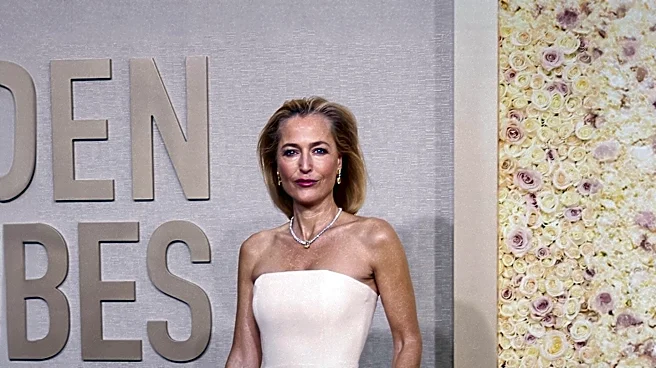
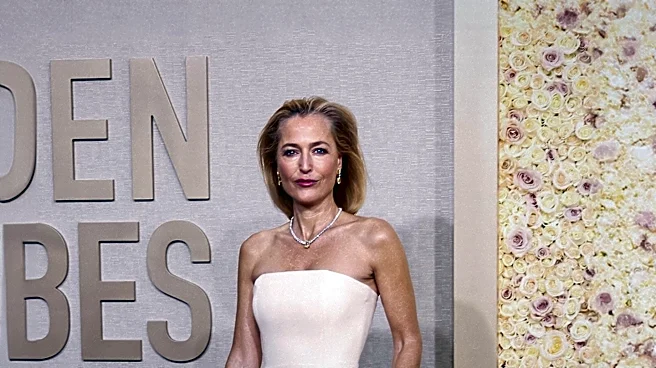
Actress Gillian Anderson, known for her role as FBI agent Dana Scully in 'The X-Files,' recently appeared on the 'Conan O’Brien Needs a Friend' podcast. During the interview, Anderson revealed her strong dislike for the intense fame that accompanied her breakout
role. She described the experience of being constantly followed and photographed by paparazzi, particularly in Los Angeles, as 'disturbing' and angering. Anderson recounted instances of pointing her car at paparazzi. She noted that filming the series in Vancouver, British Columbia, for the first five years provided a significant reprieve from this level of scrutiny, allowing her and the cast to maintain a greater sense of normalcy and sanity. Her co-star, David Duchovny, also shared his own pet peeve regarding character inconsistencies introduced by episodic directors on his 'Fail Better' podcast.
Why It's Important?
This discussion highlights the often-unseen pressures and negative impacts of celebrity culture on individuals, even those who achieve significant professional success. Anderson's experience underscores the trade-offs between widespread recognition and personal privacy, a dynamic that continues to affect public figures in the entertainment industry. The contrast between filming in Vancouver and Los Angeles illustrates how geographical location can influence the intensity of media intrusion, offering a unique perspective on the challenges faced by actors in high-profile roles. Her comments also shed light on the psychological toll that constant public scrutiny can take, emphasizing the importance of personal boundaries and mental well-being in demanding careers.
What's Next?
Gillian Anderson continues her acting career, and her recent podcast appearance may prompt further discussions about celebrity privacy and the impact of fame within the entertainment industry. The 'Conan O’Brien Needs a Friend' podcast will likely continue to feature celebrity guests sharing personal anecdotes, potentially contributing to a broader understanding of the human side of public figures. This type of candid conversation can influence how media outlets approach celebrity coverage and how the public perceives the lives of stars. The ongoing dialogue about the challenges of fame could also encourage more celebrities to speak out about their experiences, fostering a more nuanced public discourse on the subject.
Beyond the Headlines
Anderson's candid remarks delve into the ethical considerations surrounding paparazzi culture and the right to privacy for public figures. Her experience reflects a broader societal issue concerning the consumption of celebrity news and the boundaries of public interest versus personal space. The distinction she draws between filming in Vancouver and Los Angeles also subtly points to differing cultural approaches to celebrity and media intrusion. This conversation could spark deeper reflection on the responsibilities of media, the expectations placed on public figures, and the psychological impact of living under constant surveillance. It also raises questions about the long-term effects of early fame on an individual's development and well-being.