





What's Happening?
Philippe Laffont's Coatue Management has fully divested its holdings in Advanced Micro Devices (AMD) stock as of the end of September, according to its latest quarterly filing. This move contrasts sharply with Cathie Wood's Ark Invest, which recently
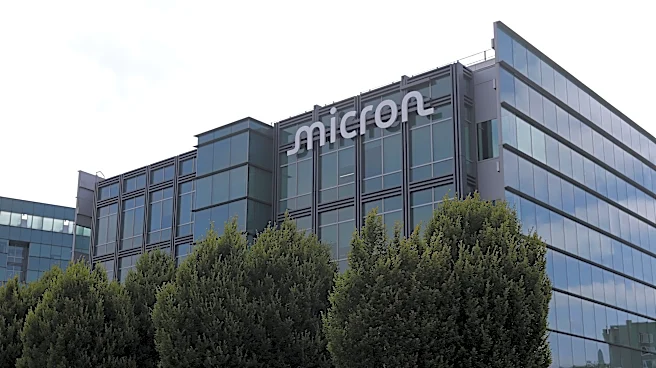
increased its stake in the chipmaker by nearly 50,000 shares on November 20, following a 13% drop in AMD's stock price. AMD's stock has experienced a significant decline, falling approximately 42% from its record close of $649.42 on October 6 to around $376. Coatue Management's exit marks the second time this year the fund has sold all its AMD shares. The fund had exited AMD in March 2026, only to buy back a smaller stake by June, which was then sold off again by September 30. Despite exiting AMD, Coatue Management maintains substantial investments in other semiconductor companies, including over $3 billion each in Taiwan Semiconductor Manufacturing, Micron Technology, and Lam Research, indicating a continued focus on the artificial intelligence (AI) sector.
Why It's Important?
The divergent strategies of prominent investors like Philippe Laffont and Cathie Wood regarding AMD stock highlight differing perspectives on the chipmaker's future performance and the broader semiconductor market. Laffont's complete divestment, especially while maintaining significant positions in other chip companies, suggests a specific bearish outlook on AMD's immediate prospects or a strategic reallocation within the AI hardware space. Conversely, Wood's decision to buy AMD shares during a price dip indicates a belief in the company's long-term value and potential for recovery. These contrasting moves can influence market sentiment and trading patterns, as institutional investor actions are often closely watched by other investors. The substantial decline in AMD's stock price also underscores the volatility within the tech sector, particularly for companies tied to the rapidly evolving AI landscape, where investor confidence can shift quickly based on market conditions and competitive dynamics.
What's Next?
The market will likely observe AMD's performance in the coming quarters to see which investment strategy proves more prescient. Future earnings reports from AMD and its competitors will be crucial in validating or challenging the current positions taken by major funds. Investors will also be watching for any further disclosures from Coatue Management or Ark Invest regarding their semiconductor holdings, which could signal shifts in their broader AI investment theses. The ongoing 'Act 2' of the AI rollout, as described by analysts, is expected to drive significant demand for advanced chips, and how AMD positions itself within this global expansion will be key. Any new product announcements, strategic partnerships, or competitive developments from AMD could also influence investor sentiment and stock performance, potentially leading to further re-evaluations by institutional investors.
Beyond the Headlines
The differing investment approaches of Laffont and Wood reflect a broader debate within the financial community about valuation and growth prospects in the AI sector. Laffont's move to exit AMD while retaining large stakes in other chip manufacturers suggests a highly selective approach to AI investments, possibly focusing on specific segments of the supply chain or companies perceived to have stronger competitive advantages. This could indicate a belief that certain parts of the AI build-out are more robust or less susceptible to market fluctuations than others. The rapid fluctuations in AMD's stock price also highlight the speculative nature of investing in high-growth technology companies, where market sentiment can be heavily influenced by short-term news and broader economic trends. This situation underscores the importance of due diligence and a long-term perspective for investors navigating the complex and often volatile technology market.