






What's Happening?
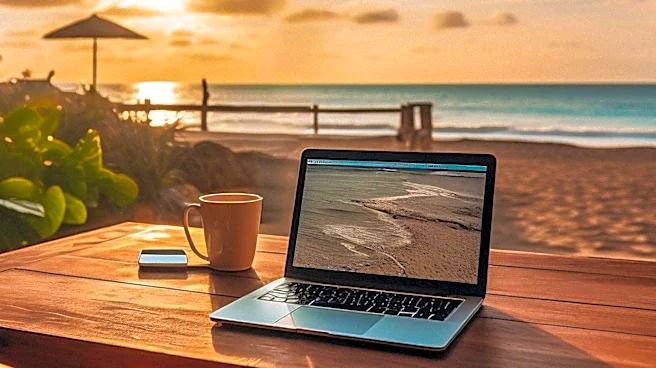
The digital nomad lifestyle, often romanticized for its flexibility and freedom, is increasingly leading to burnout for some individuals. What begins as a dream of working remotely from exotic locations can transform into a demanding routine characterized
by constant deadlines and reliance on unstable internet connections. This shift from an idealized vision to a more challenging reality highlights the hidden stresses of maintaining productivity while continuously traveling. The concept of 'Slower Travels' has emerged as a response, advocating for intentional travel and simple living to counteract the pressures of the fast-paced digital nomad existence. This philosophy encourages individuals to prioritize presence, creativity, and genuine connections over the relentless pursuit of productivity and new destinations, suggesting a reevaluation of what true balance means within this lifestyle.
Why It's Important?
This trend of digital nomad burnout is important because it challenges the prevailing narrative surrounding remote work and global mobility. While the digital nomad lifestyle offers significant advantages, such as geographical independence and diverse cultural experiences, the increasing incidence of burnout underscores the need for sustainable practices within this community. For U.S. workers considering or currently engaged in digital nomadism, understanding these challenges is crucial for maintaining mental health and long-term career viability. The emphasis on 'slower travels' and intentional living could influence how companies structure remote work policies and how individuals approach their work-life balance, potentially leading to a more mindful and less exploitative form of remote employment. This shift could also impact the travel and hospitality industries, as nomads might seek accommodations and services that support a more balanced and less transient lifestyle.
What's Next?
As awareness of digital nomad burnout grows, there will likely be an increased focus on developing resources and communities that support sustainable remote work practices. This could include the proliferation of co-living and co-working spaces designed with wellness in mind, as well as platforms offering guidance on managing work-life balance while traveling. The 'Slower Travels' movement suggests a future where digital nomads prioritize quality of experience over quantity of destinations, potentially leading to longer stays in fewer locations. This could influence local economies in popular digital nomad hubs, fostering deeper integration of remote workers into communities rather than transient tourism. Additionally, technology providers may develop more robust and reliable solutions for remote connectivity to alleviate one of the primary stressors for digital nomads.
Beyond the Headlines
The phenomenon of digital nomad burnout touches upon deeper societal implications regarding the nature of work and the pursuit of happiness. It highlights the pervasive pressure to be constantly productive and 'living the dream,' even when that dream becomes a source of stress. This situation prompts a reevaluation of what constitutes a fulfilling life and career in an increasingly interconnected world. The push towards 'slower travels' can be seen as a micro-rebellion against the relentless pace of modern life, advocating for a return to more mindful consumption and experience. Ethically, it raises questions about the responsibilities of employers and the digital nomad community to support the well-being of remote workers, ensuring that the freedom offered by this lifestyle does not come at the cost of mental and physical health. This cultural shift could inspire broader conversations about work-life integration and the true meaning of success.