








What's Happening?
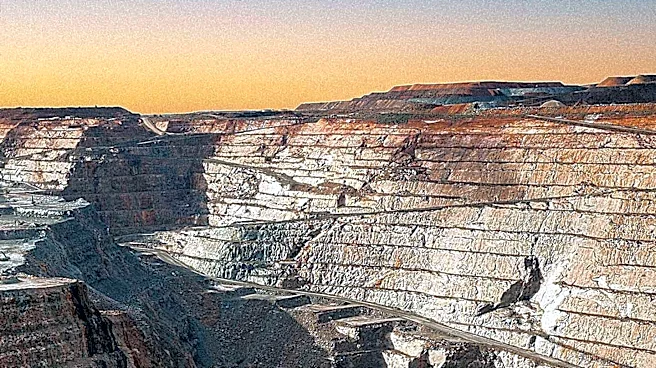
De Beers has announced a temporary halt in production at its Venetia mine in South Africa for an initial period of two years. This decision is part of a broader strategy to streamline operations and reduce costs in response to evolving industry conditions.
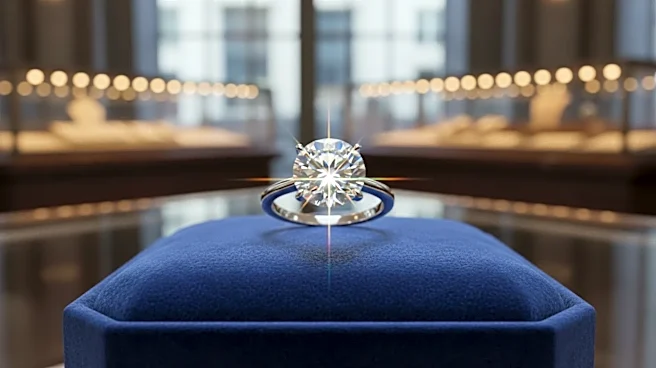
Since 2024, De Beers has been focusing on divesting non-core assets and cutting overhead costs by over $100 million annually. The company is also investing in marketing to bolster the natural diamond market, which has seen a resurgence in sales since 2025. The pause at Venetia follows a similar decision to halt the Tuzo phase three expansion at the Gahcho Kué mine in Canada. CEO Al Cook emphasized the need for business resilience and long-term value creation, noting the challenges posed by the growing market for lab-grown diamonds, which now account for 20% of sales. Meanwhile, Anglo American, the majority stakeholder in De Beers, is advancing the sale of its stake, having identified a preferred buyer.
Why It's Important?
The pause in production at Venetia is significant for South Africa, as the mine accounts for approximately 4,400 jobs and 40% of the country's diamond output. The decision reflects broader challenges in the diamond industry, including declining demand for natural diamonds and the rise of lab-grown alternatives. This shift in consumer preferences is reshaping the market, with lab-grown diamonds now representing a substantial portion of sales. De Beers' strategic adjustments aim to maintain its leadership in the industry by enhancing efficiency and focusing on high-quality diamonds, which are seeing increased demand in the U.S. and other markets. The sale of Anglo American's stake in De Beers could further alter the landscape, with interest from various governments and private buyers.
What's Next?
As De Beers implements its cost-reduction and efficiency strategies, the company will likely continue to monitor market trends and adjust its operations accordingly. The outcome of Anglo American's sale of its stake in De Beers will be closely watched, as it could lead to changes in ownership and strategic direction. The diamond industry will need to adapt to the growing presence of lab-grown diamonds, which may require traditional players to innovate and differentiate their offerings. Stakeholders, including governments and private investors, will be keen to see how these developments impact the global diamond supply and market dynamics.