









What's Happening?
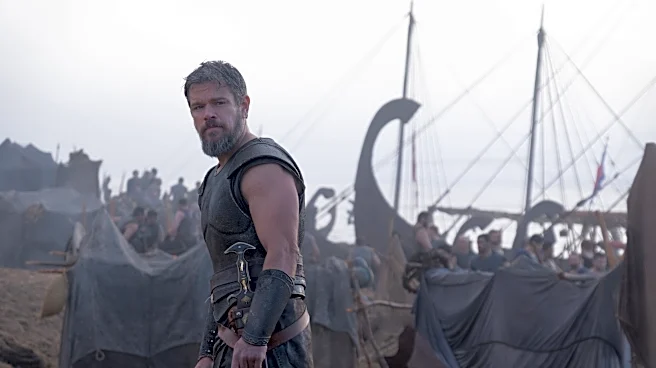
Christopher Nolan's latest film, The Odyssey, has been released to critical acclaim, with reviews praising it as a must-watch cinematic experience. The film adapts the ancient epic poem by Homer, following the journey of Odysseus, played by Matt Damon,
as he attempts to return home after the Trojan War. The Odyssey is noted for its fully realized world and epic scope, offering a singular artistic vision that contrasts with the current trend of irony in studio blockbusters. The film's success is seen as a testament to the potential of big-budget filmmaking when directors are allowed creative freedom.
Why It's Important?
The Odyssey's success highlights the importance of allowing directors creative control in big-budget filmmaking. It demonstrates that audiences still appreciate films with a strong artistic vision and immersive worlds. This could influence studios to reconsider their approach to blockbuster films, potentially leading to more diverse and innovative projects. The film's reception also underscores the enduring appeal of classic stories and the potential for modern adaptations to resonate with contemporary audiences. The Odyssey's impact may encourage studios to invest in projects that prioritize storytelling and artistic integrity.
Beyond the Headlines
The Odyssey's release raises questions about the future of big-budget filmmaking and the role of directors in shaping cinematic experiences. It challenges the current trend of formulaic blockbusters and highlights the value of originality and creativity in film. The film's success may inspire other directors to pursue ambitious projects and push the boundaries of storytelling. Additionally, it could lead to a reevaluation of how studios allocate resources and support creative talent. The Odyssey serves as a reminder of the power of cinema to transport audiences and evoke emotional responses through well-crafted narratives.