






What's Happening?
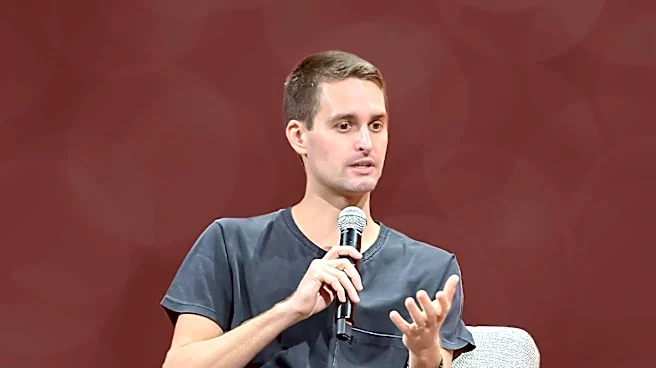
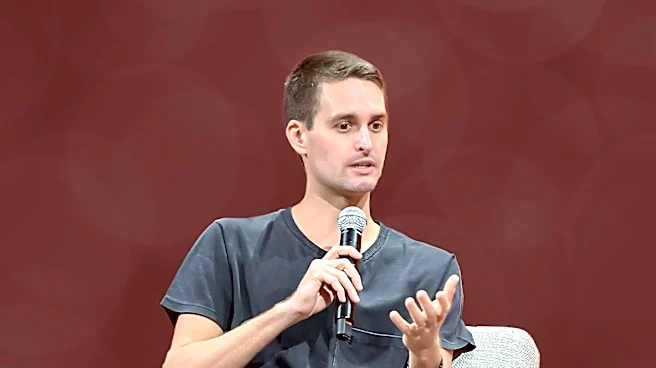
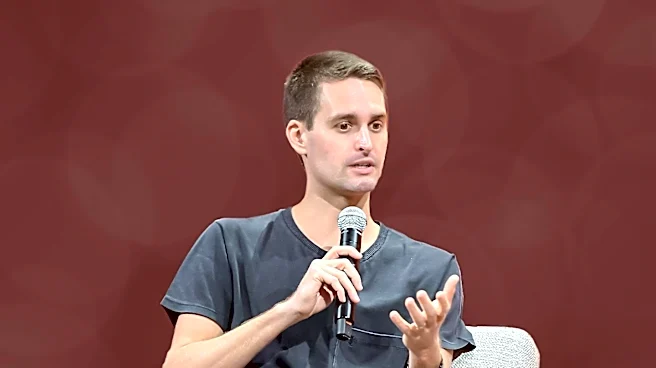
Evan Spiegel, co-founder and CEO of Snap Inc., recently engaged in a candid conversation about the journey of Snapchat, the future of artificial intelligence (AI), and maintaining personal balance in a digital world. Spiegel recounted the company's evolution
from a college idea into a global phenomenon, emphasizing the importance of trial and error, user feedback, and scaling operations. He also reflected on his decision to decline Meta's three-billion-dollar buyout offer, highlighting his team's approach to building trust and fostering creativity. Spiegel shared insights into how a childhood without television influenced his drive to build and how he manages screen time as a father of four, including his daily habits, meditation practices, and family rituals that help him stay grounded while leading a major tech company. The discussion also touched upon Snap's augmented reality glasses, SPECS, and their potential to transform learning and real-world connections.
Why It's Important?
Spiegel's insights are significant for the U.S. technology industry and broader society, particularly concerning the intersection of social media, AI, and personal well-being. His narrative of building Snapchat underscores the entrepreneurial spirit prevalent in the U.S. tech sector and offers valuable lessons on innovation and strategic decision-making, such as turning down a substantial acquisition offer. The discussion on AI is particularly timely, as Spiegel acknowledges its potential for boosting productivity and addressing demographic shifts while simultaneously warning about the immediate dangers of AI-driven cyberattacks. This highlights a critical concern for national security and economic stability, as rapid AI advancements could outpace human defense capabilities. Furthermore, his focus on augmented reality glasses, SPECS, signals a potential shift in how Americans interact with technology, moving beyond smartphones to more integrated, real-world digital experiences. This could impact various sectors, from education and entertainment to communication and commerce, shaping future consumer behavior and technological infrastructure.
What's Next?
Looking ahead, Snap Inc. is poised to continue its development in augmented reality with its SPECS glasses, aiming to integrate digital experiences more seamlessly into daily life. This initiative suggests a future where technology enhances real-world interactions rather than solely relying on smartphone screens. Spiegel's concerns regarding AI-driven cyberattacks indicate a need for increased focus on cybersecurity measures and regulatory frameworks to mitigate potential threats. The ongoing evolution of AI will likely prompt further discussions among tech leaders, policymakers, and security experts about responsible development and deployment. For Snap Inc., the challenge will be to balance innovation with user safety and privacy, especially as AR technology becomes more pervasive. The company's ability to maintain its unique culture of creativity and trust, as described by Spiegel, will be crucial for its continued growth and influence in the competitive tech landscape. The market will also be watching for how Snap's AR initiatives compete with other tech giants exploring similar frontiers.
Beyond the Headlines
Spiegel's personal reflections on a childhood without television and his current practices for managing screen time as a parent reveal a deeper societal conversation about technology's impact on human development and family life. This perspective adds an ethical dimension to the rapid technological advancements, prompting questions about digital well-being and the balance between connectivity and presence. The vision for augmented reality glasses, SPECS, extends beyond mere technological innovation; it suggests a cultural shift in how individuals perceive and interact with their environment, potentially blurring the lines between the physical and digital worlds. This could lead to new forms of social interaction, learning, and entertainment, but also raise concerns about data privacy, digital addiction, and the authenticity of experiences. Spiegel's warning about AI cyberattacks also highlights the increasing complexity of national security in the digital age, where threats can emerge and propagate at unprecedented speeds, demanding a re-evaluation of traditional defense strategies and international cooperation.